

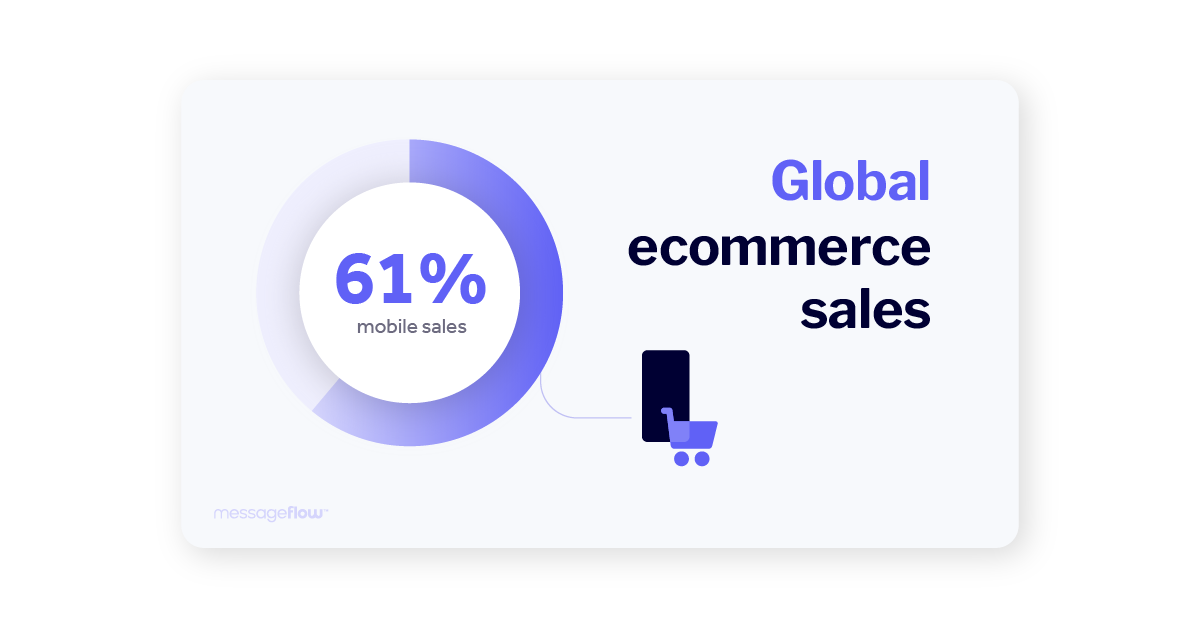
Customers shop with their phones out. They check offers before entering, compare prices at the shelf, and finish the purchase through an app. This makes location-based communication one of the most effective ways to connect digital messaging with in-store interactions.
Proximity marketing definition: proximity marketing is a location-based strategy that delivers messages to customers when they are near or inside a physical location, such as a retail store, shopping mall, or pickup point. It uses technologies like geofencing, Bluetooth beacons, Wi-Fi, NFC, and RFID to trigger real-time communication via push notifications, SMS, or RCS.
Push, SMS, and RCS each play a different role, suited to different customer scenarios and device capabilities. The choice between them usually comes down to whether the customer has your app installed and what kind of message you’re sending.
Worth clarifying upfront: proximity marketing is not about sending more messages. A well-timed single notification beats a poorly timed five.
What is proximity marketing?
Proximity marketing is a location-based communication strategy that delivers messages to customers when they are close to a specific place, such as a retail store, shopping mall, or pickup point.
It relies on technologies such as:
- geofencing (GPS),
- Bluetooth beacons,
- Wi-Fi detection,
- NFC,
- RFID (in more advanced retail environments).
Messages are delivered via push notifications, SMS, or RCS, depending on device capabilities and user permissions.
In retail, proximity marketing is commonly used to:
- increase store visits,
- influence in-store purchasing decisions,
- support loyalty and repeat visits,
- improve the customer experience at key moments of the shopping journey.
Unlike traditional mobile marketing, proximity marketing prioritizes context and timing over raw reach.
How proximity marketing works in retail
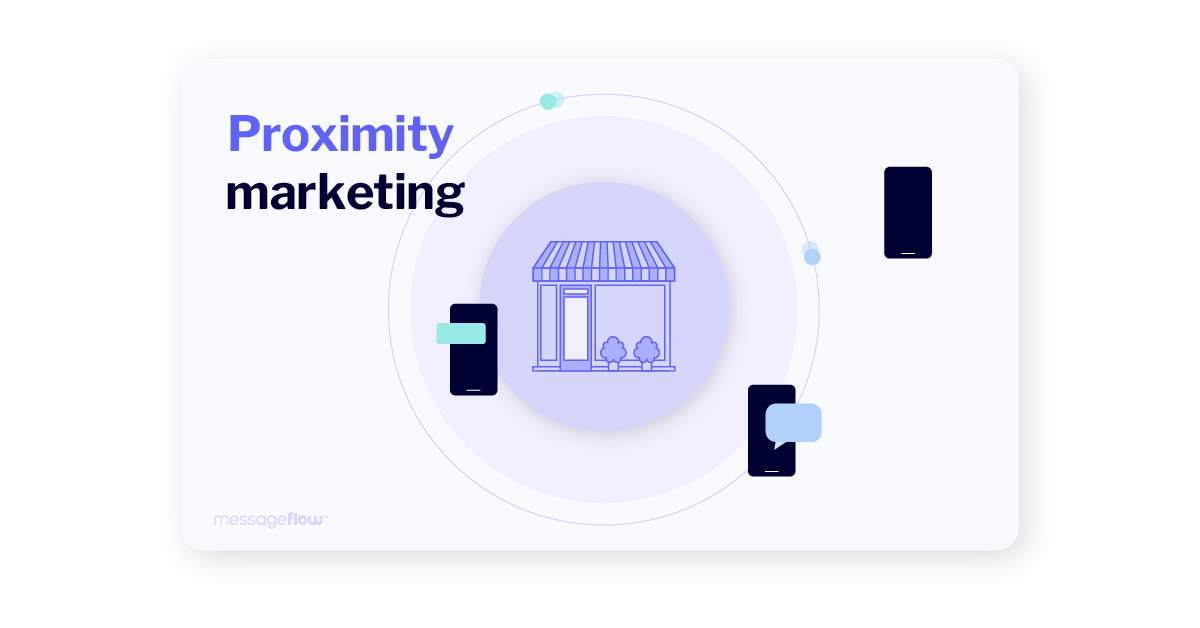
Proximity marketing connects three things: a location signal (entering a geofence or approaching a beacon), a messaging channel (push, SMS, or RCS), and customer context (permissions, loyalty status, past behavior, segmentation rules).
When these align, a message fires automatically and arrives in real time. Getting the audience definition and frequency right is what separates campaigns that feel helpful from ones that feel intrusive.
Proximity marketing technologies and devices explained
Geofencing
Geofencing uses GPS data to draw a virtual boundary around a location, such as a store, shopping mall, or event venue. When a customer crosses that boundary, a predefined action is triggered: a push notification, SMS, or RCS message.
Typical use cases include:
- store-nearby offers,
- mall-level campaigns,
- curbside pickup notifications,
- event-based promotions.
Geofencing works on Android (Firebase Cloud Messaging) and iOS (Apple Push Notification Service). Location services must be enabled on the customer’s device.
Bluetooth beacons
Bluetooth beacons are small devices installed inside stores that communicate with nearby smartphones. They are among the most common proximity marketing devices in retail and allow for in-store targeting that geofencing can’t match in precision.
Common applications:
- in-aisle messaging,
- product discovery,
- loyalty recognition,
- guided shopping experiences.
Beacon-based communication requires a retailer’s mobile app and explicit user consent. If you’re deciding between Bluetooth proximity marketing and geofencing: beacons give you precision inside the store, geofencing gives you coverage around it.
Wi-Fi-based proximity
Wi-Fi proximity marketing detects customer presence when a device connects to a store’s Wi-Fi network. It’s often used to identify repeat visitors and support service flows such as queue management or pickup coordination.
NFC proximity marketing
NFC (Near Field Communication) triggers interactions when a customer taps their phone to a specific display. It works well for in-aisle product information and loyalty redemption, where the customer is already engaged with a specific item.
RFID
RFID is primarily an inventory management tool. In some advanced retail setups it can contribute to proximity experiences, but it’s not typically the main driver of customer-facing campaigns.
Proximity marketing examples in retail
Common scenarios that retailers use in practice:
Entry-triggered promotions: a customer enters a geofenced area and receives a limited-time offer to encourage an immediate visit.
In-store flash sales: customers get location-triggered discounts as they move through specific areas of the store.
In-store product recommendations: Bluetooth beacons trigger product suggestions while the customer is browsing a specific category.
Loyalty recognition on arrival: loyalty members receive a notification about rewards when they walk in, nudging them toward another purchase. See how technology supports building customer loyalty.
Curbside pickup automation: arrival near the store triggers a confirmation that the order is ready, cutting wait times.
Post-visit follow-ups: a message sent after the visit surfaces products the customer viewed but didn’t buy.
Event-based campaigns: promotions sent to customers physically present during a sale or event, where the in-person context makes the message more relevant.
Proximity push notifications: strengths and limitations
Push notifications work because they arrive in real time and connect directly to the app. For that to happen, three things need to be true: the retailer’s app is installed, push permissions are granted, and location services are enabled.
That’s a narrower slice of your customer base than you might think. Push works well for app-centric and loyalty-focused experiences. For everyone else, push notification marketing without an app is not an option: push requires an installed app by definition. That’s why most retailers pair push with SMS and RCS rather than relying on it alone. For a deeper look at how push fits into a marketing strategy, see our mobile push notification marketing guide.
SMS proximity marketing
SMS addresses the reach problem that push creates. It doesn’t require an app, which means it works for a much larger share of your customer base. SMS proximity marketing and proximity text message marketing refer to the same thing: text messages triggered by location events.
SMS works best for:
- urgent or time-sensitive messages,
- simple calls to action,
- customers without the app,
- fallback when push isn’t available.
The discipline with SMS is frequency. Explicit opt-in, suppression after conversion, and a hard limit on messages per week keep it from feeling like spam.
RCS proximity marketing
RCS (Rich Communication Services) gives you the reach of SMS with the content capabilities of a mobile app: product carousels, interactive buttons, branded sender identification. No app required on the customer’s side.
In proximity scenarios, RCS is particularly well suited to product discovery near the store, where showing a visual of the product and a button to navigate there does more than a text link ever could. For retail-specific use cases, see our guide to RCS for ecommerce and retail.
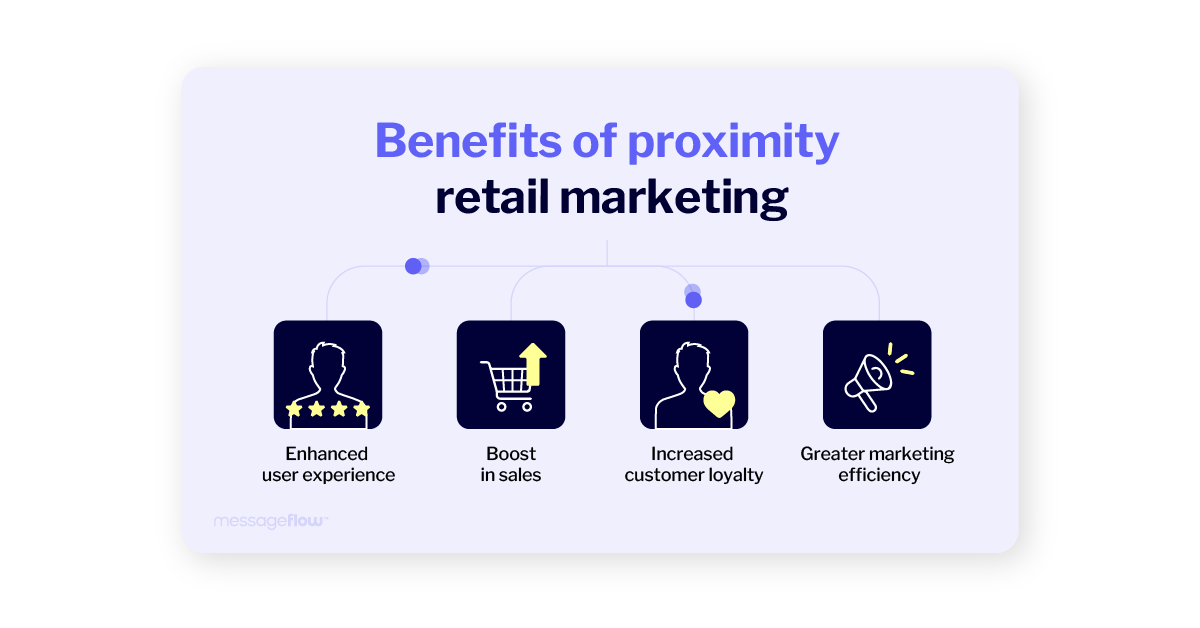
Benefits of proximity marketing in retail
Better personalization: the message is based on where the customer actually is, not a segment they belong to. That context makes even simple messages feel relevant.
Higher engagement and conversions: customers in or near a store are already in a buying mindset. A well-timed message at that moment converts at a higher rate than any scheduled broadcast.
Improved in-store experience: beacons and geofencing can guide customers to products, confirm pickups, or surface loyalty benefits without them needing to search for anything.
Data you can act on: proximity campaigns generate data on where customers go, how long they stay, and what they respond to. All of this feeds back into better targeting.
Better use of your budget: reaching customers who are physically nearby means fewer wasted impressions than broad digital campaigns.
Challenges and best practices
Privacy and trust: location-based messaging is permission-based by nature, but it can still feel intrusive if done badly. Transparency and easy opt-out matter. GDPR compliance is a baseline, not a ceiling.
Technology complexity: proximity marketing touches multiple systems. Starting with one clearly defined use case (say, a curbside pickup notification) and building from there is less risky than trying to deploy everything at once.
Channel fragmentation: not all customers have your app. Not all are on Android. Building a setup that routes between push, SMS, and RCS based on what’s available for each customer is what makes proximity marketing actually reach people rather than just some of them.
Proximity marketing within the omnichannel journey
Proximity marketing works best when it’s connected to what you already know about a customer. The principles behind this are covered in our guide to cross-channel communication essentials. Browsing history, past purchases, email engagement: all of this can inform what message gets sent when someone walks into your store. That’s what closes the gap between online and physical shopping, rather than treating them as two separate things.
Choosing proximity marketing software and solutions
When comparing proximity marketing solutions, the practical checklist is short:
- multiple location triggers (geofencing, Bluetooth beacons),
- multi-channel delivery (push, SMS, RCS),
- consent and preference management,
- segmentation and suppression rules,
- real-time analytics and attribution.
A platform that doesn’t handle all of these forces you to patch together multiple tools, which defeats the purpose of proximity marketing’s real-time nature.
Final thoughts
Proximity marketing is a straightforward idea: reach the right person, in the right place, at the right time. The execution is what’s hard: choosing the right technology, the right channel, and the right message for each situation.
Push, SMS, and RCS give you the tools to cover that range. MessageFlow’s Mobile Push platform handles Android and iOS delivery, segmentation, and analytics in one place.
Ready to bring more foot traffic into your store with proximity marketing? Contact us and let’s explore how Mobile Push and RCS can transform your retail strategy.
FAQ – Mobile Proximity Marketing in Retail:
Proximity marketing is a location-based strategy that delivers messages to customers when they are near or inside a physical location, such as a retail store. It uses technologies like geofencing, Bluetooth beacons, Wi-Fi, NFC, or RFID to trigger timely communication on mobile devices.
Proximity marketing is a technique that automatically triggers messages to mobile devices when users enter or approach a defined geographic area or in-store zone. The message is delivered via push notification, SMS, or RCS based on device capabilities and user consent.
Common examples include entry-triggered discounts, in-store product recommendations using Bluetooth beacons, curbside pickup notifications, loyalty rewards on arrival, and post-visit follow-up messages.
Proximity push notifications are mobile push messages triggered by location events, such as entering a geofence or approaching a Bluetooth beacon. They require a retailer’s app, push permission, and location services enabled.
SMS proximity marketing, also called proximity text message marketing, uses text messages triggered by location events such as being near or inside a store. It reaches customers without a mobile app and is used for urgent offers and simple calls to action.
Bluetooth proximity marketing uses small beacon devices installed inside stores that communicate with nearby smartphones. It enables in-aisle messaging, product recommendations, and loyalty recognition with precision that GPS-based geofencing can’t provide indoors.
Proximity marketing devices include Bluetooth beacons, GPS-enabled geofencing infrastructure, Wi-Fi access points used for customer detection, NFC tags, and RFID readers. Beacons are the most common in-store device.
Geofencing (GPS), Bluetooth beacons, Wi-Fi detection, NFC tags, and RFID, combined with customer data platforms and analytics tools.
Higher in-store conversion rates, more relevant customer communication, improved loyalty engagement, better targeting efficiency, and a tighter connection between online browsing and in-store behavior.
Yes, when done correctly. It must be permission-based, transparent, and allow users to opt out easily. GDPR compliance is the minimum standard.
Location trigger support, multi-channel delivery (push, SMS, RCS), consent management, segmentation, suppression rules, and real-time analytics. MessageFlow covers all of these in one platform.