TL;DR: RCS (Rich Communication Services) lets businesses send branded, interactive messages with carousels, buttons, images, and in-message payments, directly in the customer’s native messaging app. Open rates reach 53% during peak campaigns. This article covers 10+ real-world RCS examples and use cases across retail, healthcare, e-commerce, financial services, and more.
What is RCS messaging?
Rich Communication Services (RCS) is the modern successor to SMS. It runs over mobile data and delivers an app-like experience inside the phone’s default messaging app, no download required.
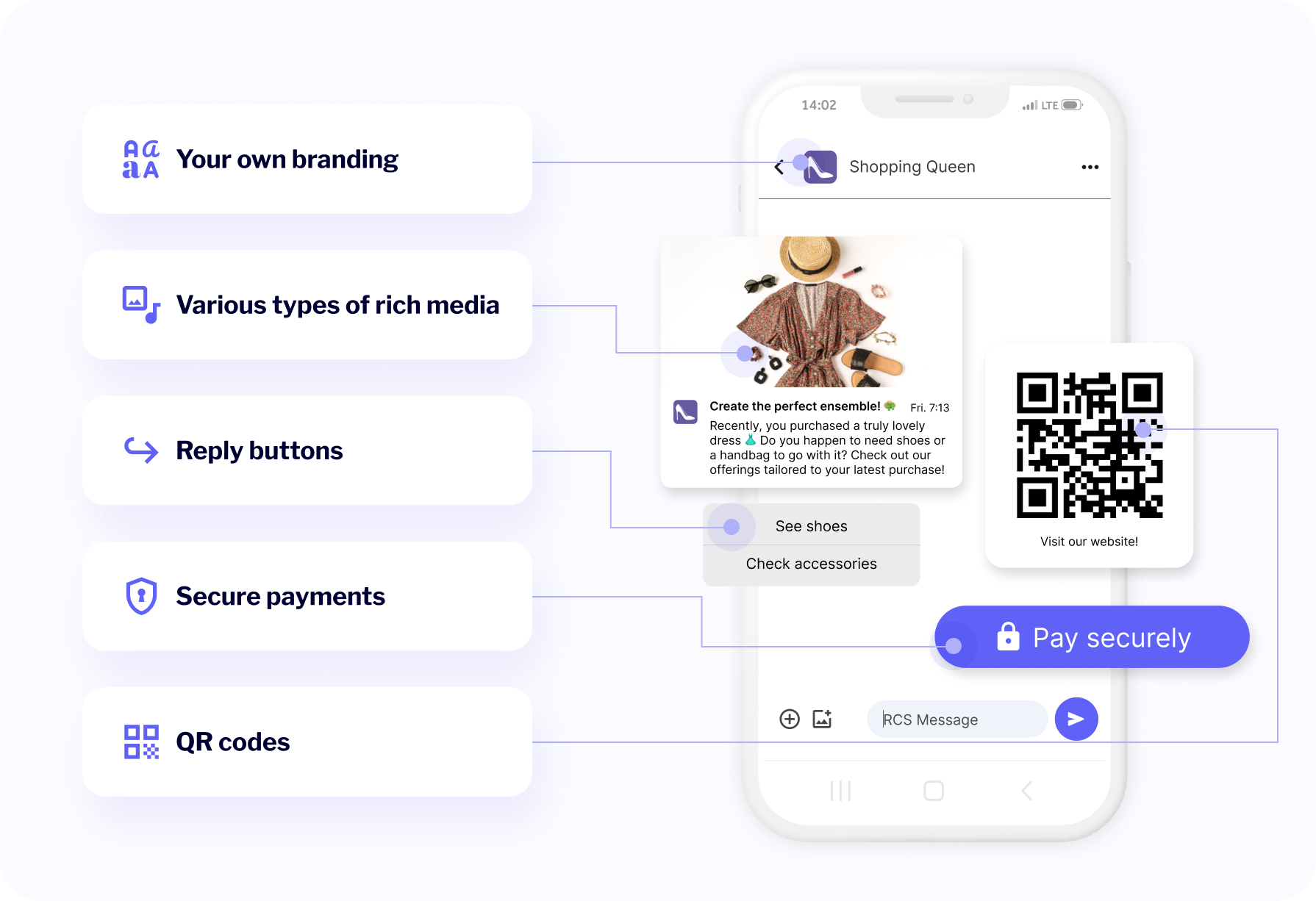
For business senders, that means a verified brand profile with your logo, high-resolution images and videos, interactive buttons for actions like “Confirm” or “Buy Now,” horizontal product carousels, QR codes, Google Wallet payments, and delivery receipts. All of it lands in the same inbox as a regular text message.
For a technical deep-dive into how it works, see our RCS messaging guide.
💡 RCS usage grew 111% during the 2024 holiday season compared to 2023. Brands running campaigns in that period saw open rates of 53%. (Sinch, State of RCS 2025 Report)
How RCS compares to SMS
Before getting into specific examples, let’s address the question that comes up constantly: is RCS actually better than SMS?
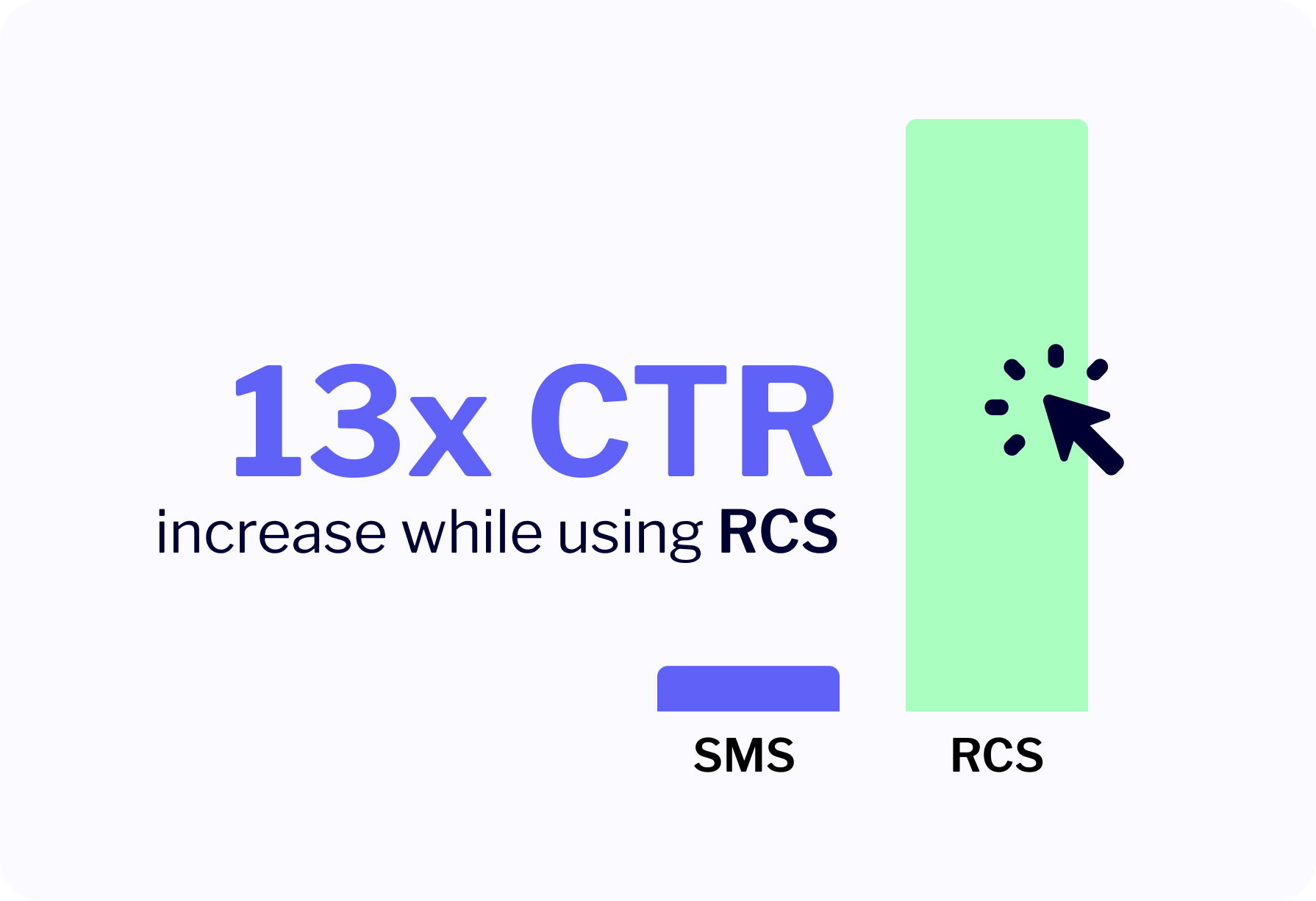
For engagement-focused campaigns, yes, and not by a small margin. Our RCS vs. SMS breakdown covers this channel by channel, but the short version is: SMS wins on raw reach and reliability; RCS wins on engagement and interactivity.
Cost per click for RCS runs 14 times lower than SMS in comparable campaigns. Conversion rate uplifts versus MMS sit at 60 to 70%. The trade-off is device and carrier compatibility, which is why smart platforms send RCS first and fall back to SMS automatically when the recipient can’t receive it.
Real-life RCS messaging examples
The four campaigns below were all run via MessageFlow and represent different industries and goals.
AliExpress Polska: Singles’ Day product carousel
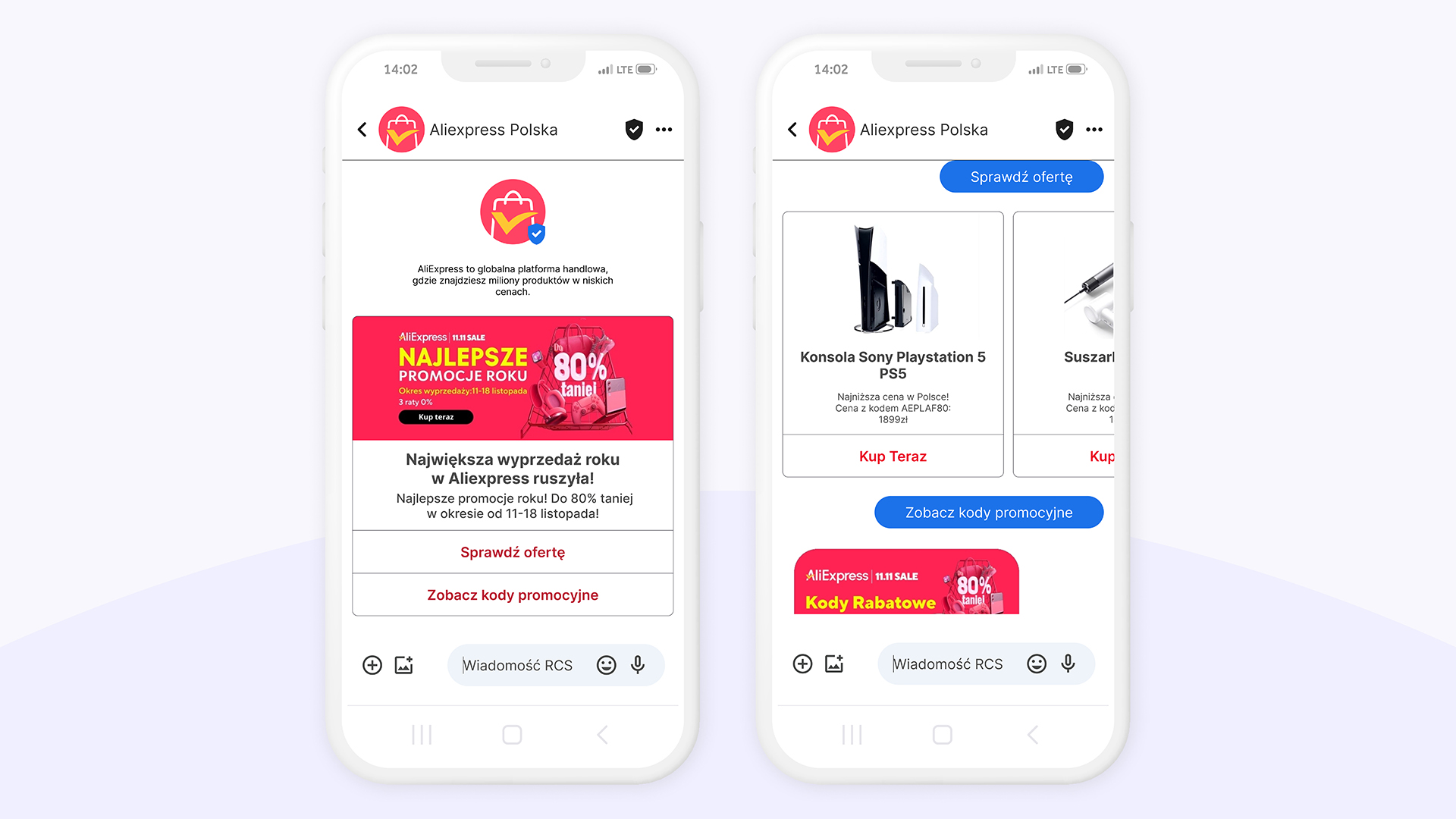
AliExpress Polska built a campaign around Singles’ Day using product carousels made of rich cards. Each card showed a promoted item with an image, price, and a direct action button. The format suits any high-traffic shopping period: Black Friday, Cyber Monday, seasonal sales. Customers browse and decide without ever leaving the message thread.
STS: sports betting engagement during Euro Cup 2024
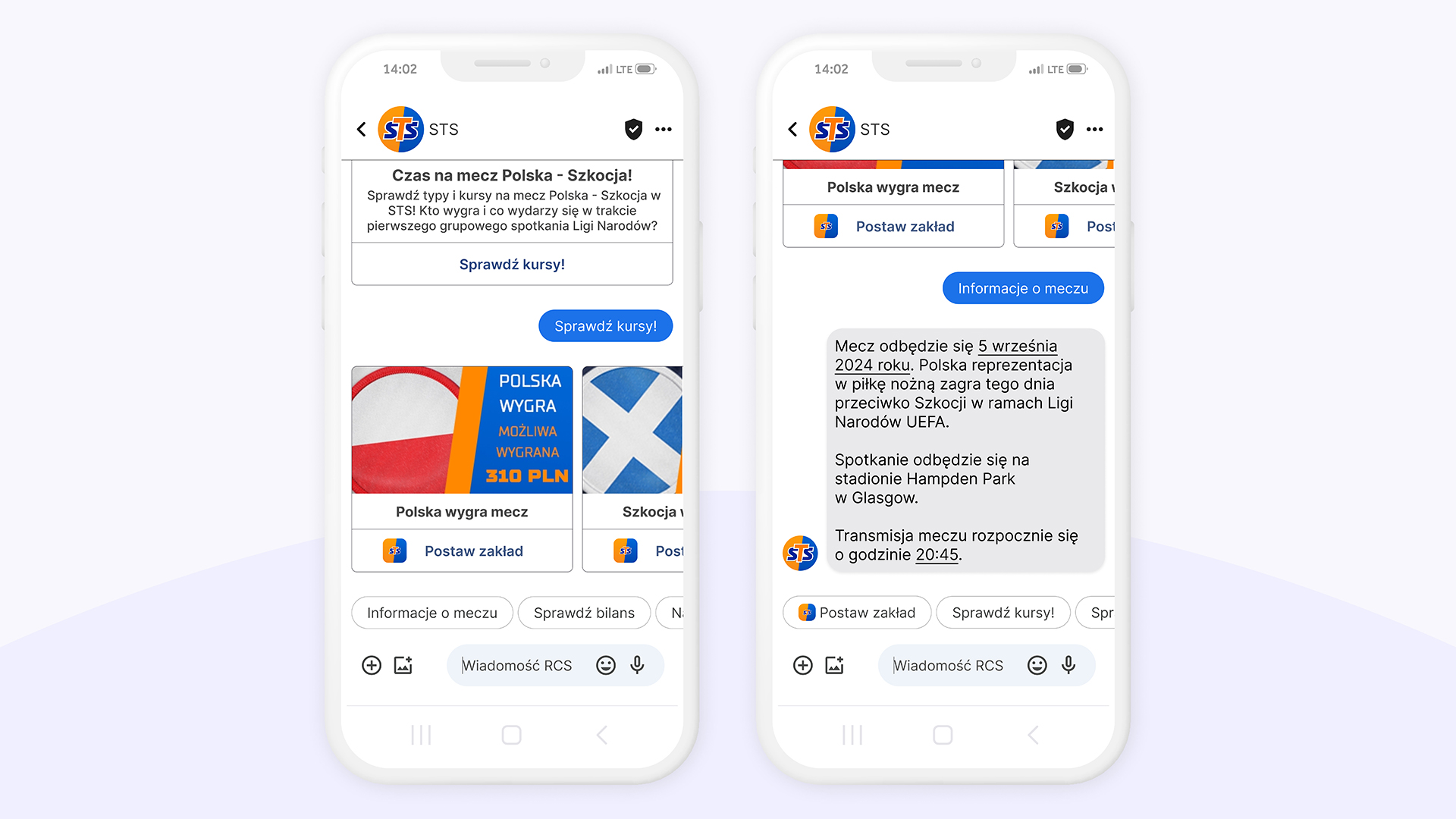
STS, a major Polish bookmaker, used RCS during Euro Cup 2024 and the UEFA Nations League. Customers got messages with betting options in interactive carousels with action buttons, everything available in one message feed. SMS would have been a link. This was the actual experience.
Ziaja: birthday sale announcement
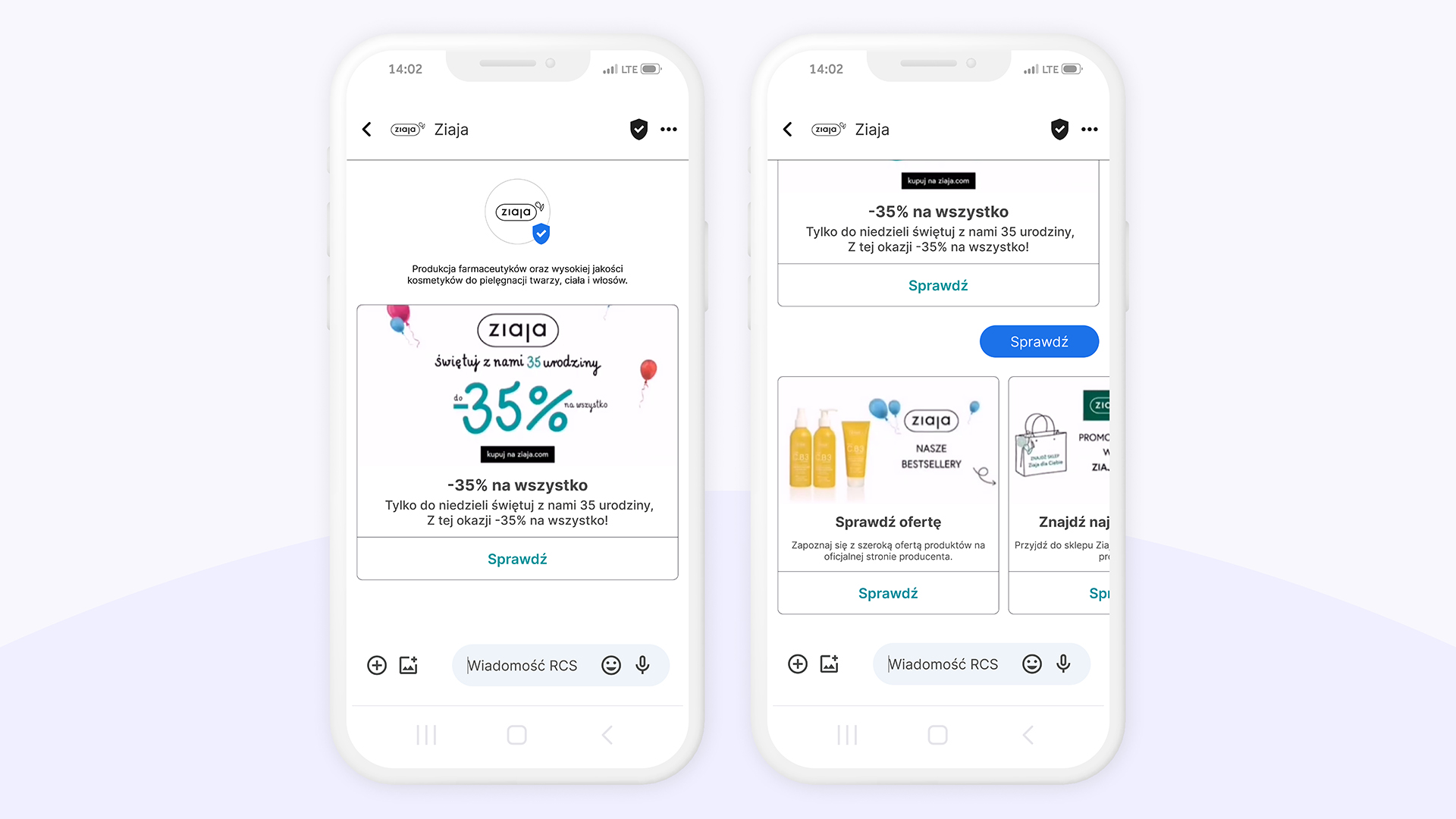
Cosmetics brand Ziaja used RCS to announce a major birthday sale. Rich imagery, a clear discount, a wide product selection, delivered directly to the customer’s phone. A straightforward promotional message that benefits enormously from visual presentation, something SMS simply cannot replicate.
Home&You: Christmas campaign
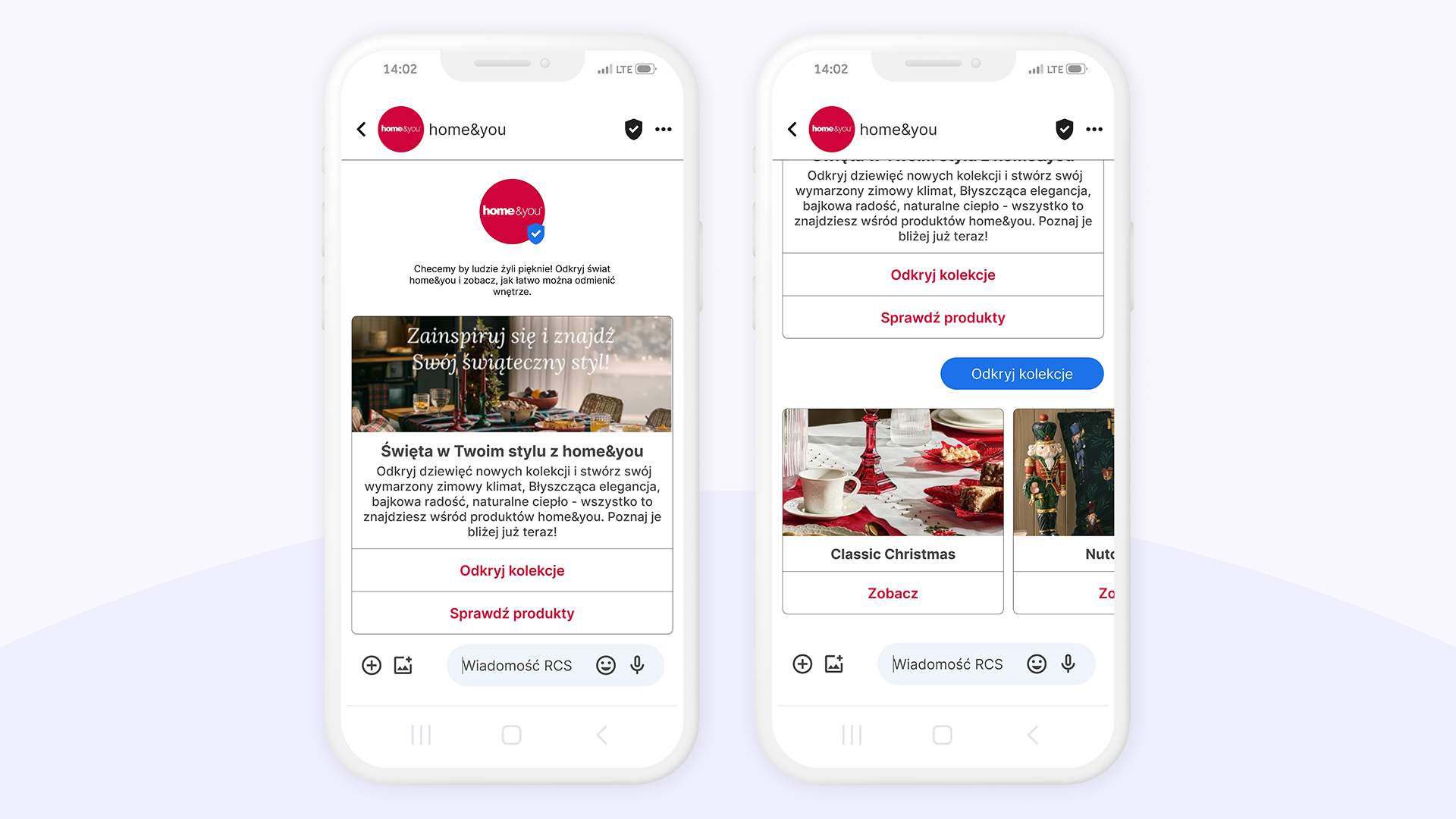
Home&You, a home décor brand, ran a festive campaign featuring holiday imagery and a product carousel. Customers browsed items by tapping through cards and hitting buttons to see product details. The visual format did something a plain text message cannot: it carried the seasonal mood.
The RCS business messaging examples above clearly showcase how businesses use rich media, product carousels, and a slew of other interactive features to reach customers in a novel and exciting way.
RCS use cases by industry
The campaigns above were built around retail promotions. RCS handles a lot more than that.
Retail and e-commerce
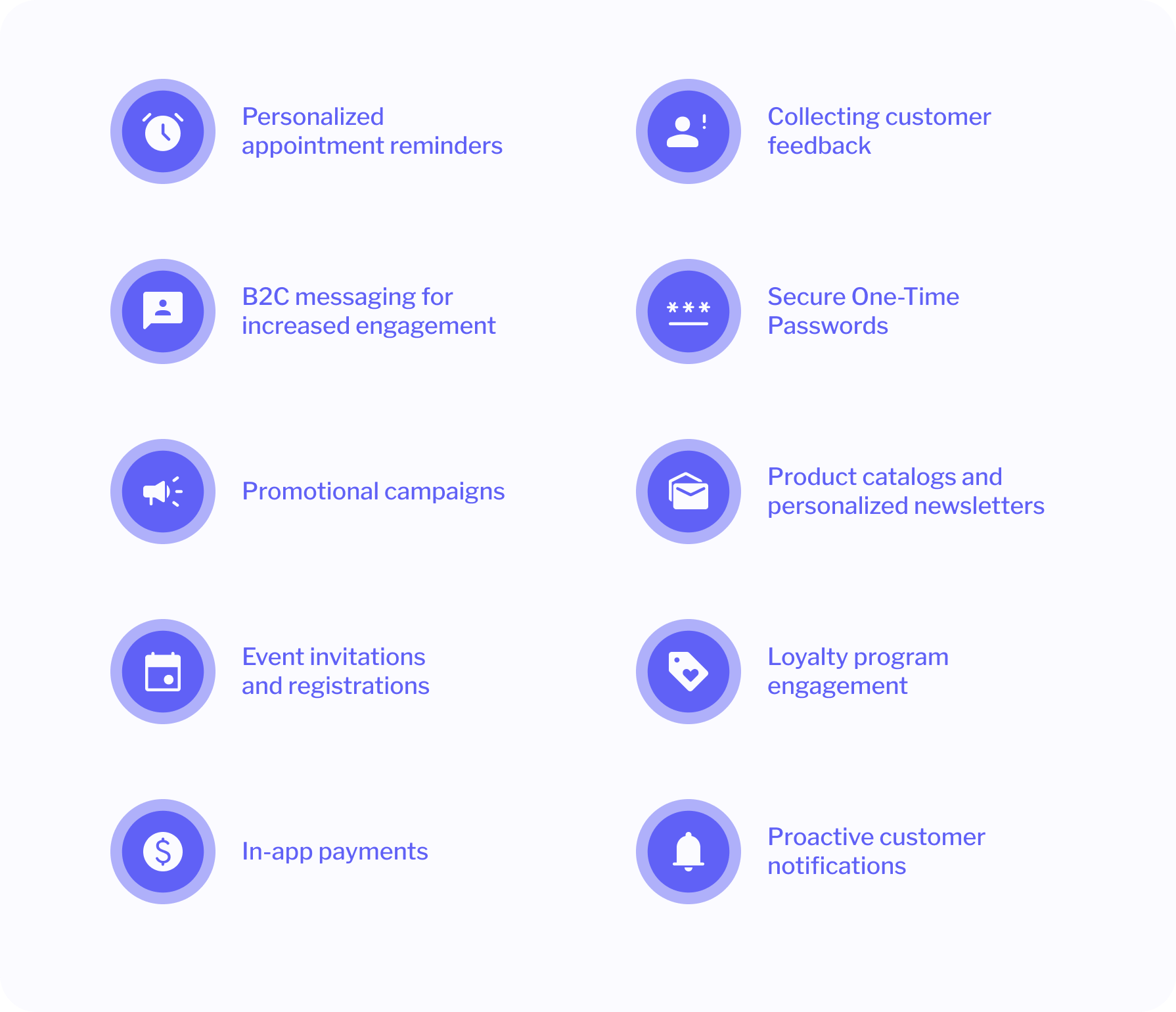
Promotional campaigns. Carousels and action buttons turn a discount announcement into an interactive shopping session. Customers browse, save favorites, and purchase inside the message.
Personalized product catalogs. Instead of a static email, a dynamic RCS message with real product images, descriptions, and buy-now buttons. Personalization runs on purchase history and browsing behavior.
Cart recovery alerts. A customer left items in their cart. An RCS message showing those exact products, with a one-tap checkout button, consistently outperforms a plain reminder. RCS for e-commerce and retail covers this in detail, including a case study where the first RCS sales campaign boosted revenue by 115% compared to equivalent SMS.
Loyalty program engagement. Points updates, exclusive offers, and promo QR codes inside the chat. Customers redeem rewards with a single tap.
Healthcare
Appointment reminders. An RCS reminder includes the date, time, clinic address, and three buttons: Confirm, Cancel, Reschedule. No phone call needed, no portal login. Providers using RCS consistently report fewer no-shows compared to SMS-only workflows.
Post-care follow-up. After a visit, a quick RCS survey with tappable ratings and a short text field collects feedback in under 30 seconds. Far more effective than emailed forms people open three days later, if at all.
Prescription and care instructions. Rich cards display preparation steps with supporting images before procedures. Patients get everything they need in one message, not a link to a PDF.
According to Sinch, 36% of healthcare organizations already use RCS and 45% plan to invest in it over the next 12 months.
Financial services
Secure One-Time Passwords (OTP). RCS OTPs arrive from a verified brand sender with a logo and trust badge. Customers can visually confirm the message is legitimate before acting on it. 59% of consumers prefer RCS over SMS for verification messages. (Sinch, State of RCS 2025 Report)
Fraud and transaction alerts. A flagged transaction arrives as a branded RCS message with a “This was me / This was not me” button pair. The customer resolves it in seconds without calling support.
In-message payments. Google Wallet integration means customers complete purchases within the conversation. Verified sender, zero friction, no redirect to a browser.
Travel and hospitality
Booking confirmations. A confirmation that includes the reservation card with hotel imagery, check-in instructions, an “Add to Calendar” button, and a map tap, all in one message. This is what the airline and hotel industry has been trying to replicate with email for years.
Upgrade offers. Airlines and hotels use RCS carousels to present upgrade options with images and pricing. The interactive format turns an afterthought into a real conversion moment.
B2B and services
Customer feedback collection. Interactive surveys with quick-response buttons get significantly higher response rates than email surveys. Businesses can also integrate RCS feedback flows with reputation management tools to automate sentiment analysis.
Event invitations and registrations. RSVPs, calendar links, venue maps, session details, all in one message. Recipients confirm with a single button tap.
Proactive notifications. Low-stock alerts, subscription renewal reminders, order status updates, each with actionable buttons so customers can reorder or update preferences immediately. RCS statistics and benchmarks go deeper on performance across these scenarios.
Chatbot-assisted messaging
Automated conversations. RCS chatbots handle FAQs, route inquiries, and guide customers through purchases inside the native messaging interface. The RCS chatbot guide explains how these flows are built. MessageFlow data shows 9% CTR for RCS campaigns in the services sector using chatbot-assisted sequences.
RCS performance benchmarks
If you are evaluating RCS for the first time, these are the numbers worth having on hand:
| Metric | Benchmark |
|---|---|
| Open rate (peak period) | 53% (Sinch, 2024 holiday data) |
| CTR, services sector | 9% (MessageFlow campaigns) |
| ROAS, cross-sell campaigns | 5.55x (MessageFlow data) |
| Conversion uplift vs MMS | 60 to 70% |
| Cost per click vs SMS | 14x lower |
| Revenue uplift vs SMS | +115% (MessageFlow e-commerce case study) |
Results vary by industry, list quality, and message design. But retail and healthcare campaigns tend to see the biggest gains, because those are the sectors where interactive formatting changes how people actually respond.
Ready to run your first RCS campaign?
With iOS 18 bringing Apple devices into the ecosystem, RCS now reaches both Android and iPhone users. RCS usage grew fivefold globally in 2024 following Apple’s adoption, and traffic hit 50 billion messages in 2025. (GSMA, Infobip)
If the examples and use cases here look relevant to your business, talk to the MessageFlow team about what an RCS campaign would look like for your industry and goals.
Frequently asked questions
A practical RCS message example is a retailer’s branded campaign featuring a product carousel with images, prices, and a “Shop Now” button. Unlike SMS, the message arrives from a verified sender with a company logo. Customers tap through to buy without leaving the messaging app. Real examples include the AliExpress Singles’ Day promotion and the Ziaja birthday sale, both run via MessageFlow.
The strongest business use cases for RCS are: promotional campaigns with product carousels, appointment reminders with confirm and reschedule buttons, secure OTP authentication, loyalty program updates, and post-purchase feedback surveys. Retail, healthcare, financial services, and e-commerce see the most consistent results.
RCS adds what SMS lacks: branded sender profiles, interactive buttons, image carousels, and read receipts. Campaigns report open rates up to 53% during peak periods and cost-per-click rates 14 times lower than SMS. Engagement goes up because customers act directly inside the message, without clicking out to a browser.
Retail and e-commerce use RCS for product carousels and cart recovery. Healthcare relies on it for appointment reminders with interactive scheduling. Financial services use it for verified OTP and fraud alerts. Travel brands use it for booking confirmations and upgrade offers. The verified sender trust badge matters across all of them.
Yes. RCS appointment reminders include the date, time, location, and buttons to confirm, cancel, or reschedule, without leaving the messaging app. Providers using RCS for appointment management report fewer no-shows and higher response rates compared to SMS-only reminders.
A rich card is a single visual tile: one image, a headline, a short description, and up to two action buttons. A carousel is a horizontal sequence of multiple rich cards in a single message. Users swipe through to compare products, offers, or event options. Carousels work well for product catalogs, seasonal promotions, and anything where choice is the point.
.