

SMS notifications remain a communication channel that has consistently held its ground in business strategies, despite the rapid rise of newer tools and platforms. Importantly, this isn’t exactly due to the format itself, but rather the very specific and practical role it plays. SMS makes it possible to deliver information that is truly important to the recipient in a way that is direct, clear, and hard to miss.
In today’s world, saturated with digital communication, attention has become scarce. Email inboxes are overflowing, mobile apps compete fiercely for notification visibility, and users are increasingly selective about which signals they choose to notice and which to ignore.
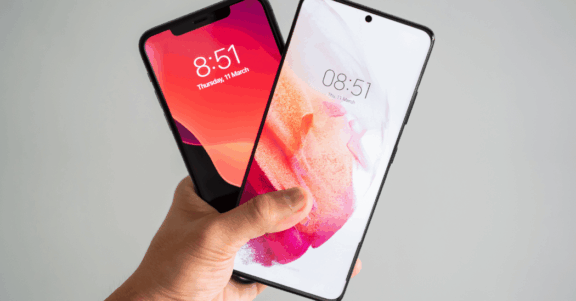
It’s also worth noting that SMS notifications are delivered directly to mobile devices regardless of the operating system, including users on Android and iOS. This makes SMS a truly universal communication tool, allowing businesses to reach a broad audience without relying on app installations or platform-specific ecosystems.
Key takeaways
- SMS isn’t a fallback channel but a deliberate choice for moments that truly matter.
Its value doesn’t come from novelty or reach. Instead, it’s rooted in predictability and clarity when information must be seen and understood. - The real strength of SMS emerges in contrast, not in isolation.
Understanding when SMS notifications outperform email or push is chiefly about timing, context, and user attention. - Treating text messages as a critical layer changes how communication is designed.
Once SMS is positioned as a failsafe rather than a broadcast tool, it reshapes decisions around workflows, priorities, and customer experience.
What are SMS notifications
SMS notifications are short text messages delivered directly to the recipient and used by businesses to communicate specific events, status updates, or important changes. Their main advantage lies not in the format or message length, but more so in the timing and context in which they reach the user.
Unlike email or push notifications, SMS does not require:
- internet access
- a personal user account
- an installed mobile application
- the user to actively check incoming communication
This simplicity is what makes SMS notifications a dependable choice when the message needs to reach the recipient immediately and without friction. Having a robust text messaging strategy allows you to automate, personalize, and track delivery, making SMS a powerful tool for timely and effective communication.
An SMS message appears directly on the phone’s lock screen, which significantly increases the likelihood that important notifications will be noticed. In addition, displaying a sender name instead of a raw phone number helps build brand recognition and trust, directly contributing to the effectiveness of your business communication.
Using dedicated phone numbers, such as short codes or branded sender IDs, further enhances trust and enables two-way communication with customers.
From the recipient’s perspective, this means convenience and predictability. From the company’s point of view, it enables information to be delivered in a way that is minimally dependent on external factors beyond its control.
This is why, in business contexts, SMS is rarely used for storytelling or building long-form narratives. Its role is to inform, confirm, remind, or alert – clearly and without unnecessary context – especially when it comes to critical notifications for customers or employees.
Effective SMS communication also requires customers in your contact list to opt in, so that you meet compliance requirements and act legally.
Types of SMS notifications in customer communication
Although the message format itself is fairly uniform, SMS notifications play different roles within organizations. These distinctions are not driven by some tech differences, but rather by the purpose each message serves in the customer communication process.
SMS notifications can be informational, alert-based, or transactional messages, each serving a unique function in customer communication.
SMS alerts deliver clear value on both ends of the exchange, enabling important information to be shared quickly and effectively. The delivery of SMS notifications is usually handled through a platform like MessageFlow, allowing you to automate messages and reach your target audience almost instantly and at scale.
For recipients, SMS notifications are often used to deliver crucial messages that require immediate attention, making sure that critical communication is received and acted upon promptly.
Informational SMS notifications
These are messages that address a core recipient need: “What’s happening with my request or process?” They provide updates on statuses, progress, confirmations, or upcoming deadlines. By delivering timely updates, these SMS notifications ensure recipients are always informed about the latest developments. Their value lies in reducing uncertainty and eliminating the need for users to manually check the status of a given issue.
Transactional SMS notifications
This type of communication relates to events directly triggered by user actions or system processes. It includes, for example, transaction confirmations, changes in access, account security alerts, or messages that require the recipient’s attention.
Transactional SMS notifications are ideal for delivering time sensitive information that requires immediate action. They are often treated as high-importance communication, as missing or overlooking them can lead to tangible consequences. Shipping notifications are a key example of transactional messages that keep customers informed about their orders.
SMS alerts
These are short, urgent messages used to notify recipients about situations that require attention, and sometimes, immediate action. Their effectiveness comes from instant visibility and a clear, unambiguous message.
They often include clear instructions to help recipients take the necessary action quickly. A typical example would be an SMS alert related to account access or service activation, such as: “To access your account, confirm your login using the code sent via SMS.”
An overview of SMS notification types
| Type of SMS notification | Primary purpose | Typical use cases | Why it works well |
|---|---|---|---|
| Informational | Keep recipients informed about the current status of a process. | Status updates, confirmations, progress notifications, upcoming deadlines. | Reduces uncertainty and removes the need for users to manually check information. |
| Transactional | Communicate events triggered by user actions or system processes. | Transaction confirmations, shipping notifications, access changes, security alerts. | Delivers time-sensitive, high-importance information that may require immediate attention. |
| Alerts | Prompt recipients to notice and react to urgent situations. | Account access verification, service activation, critical system alerts. | High visibility and clear instructions enable fast, decisive action. |
Shared benefits of SMS notifications
What all of these SMS notification types have in common is their primary informational role, as well as the tangible value they deliver to both sides of the communication channel.
For businesses, this means fewer inquiries directed to customer support, greater predictability and stability of internal processes, and better control over critical moments in the customer journey.
For recipients, SMS notifications save time, provide a sense of control, and reinforce the feeling that the company communicates in a structured way that is appropriate to the situation at hand.
Bulk SMS vs. email vs. push – What sets these channels apart?
When comparing SMS notifications, email, and push messages, it’s easy to fall into the trap of a surface-level judgment, trying to decide which channel is simply better or more effective.
In practice, a far more useful question is which channel best fits a specific moment and communication goal.
For example, SMS notifications are often used for urgent or time-sensitive updates, while transactional emails deliver important information about account activity or purchases, and marketing notifications are designed to promote offers or engage customers with new content. Each clearly serves a different purpose in your communication strategy.
Each of these formats operates as a distinct marketing channel in a different attention context, comes with its own set of user expectations, and imposes distinct limitations. The effectiveness of SMS, email, or push depends on the context and the concrete goal of your campaign. Understanding these differences makes it possible to build communication that is consistent and predictable, rather than fragmented or random.
Visibility and message consumption
- SMS appears directly on the phone’s lock screen and is visible regardless of apps or the email inbox.
- Email is typically reviewed in batches, often at specific times of day, and competes with a high volume of other messages.
- Mobile push notifications require a dedicated app and the user’s explicit consent to receive them. App notifications can be customized or disabled based on user preferences, allowing recipients to control notification types and frequencies.
Reaction time
When information needs to be noticed as quickly as possible, SMS notifications have a natural advantage. For example, delivery notifications, appointment reminders, and security alerts all benefit from SMS’s rapid delivery.
Email and push work better in scenarios where a delayed response is acceptable or where immediacy is not critical.
Usage context
SMS messages are read in a wide range of situations – on the move, at work, or between other activities. This makes them highly universal, but also forces senders to be concise and precise.
This broad reach makes SMS an effective tool for maintaining customer engagement across diverse situations. If you’re concerned about delayed SMS messages, understanding the causes can help you ensure timely delivery.
Email and push notifications allow for more context and depth, but demand a higher level of attention and engagement from the recipient.
Two-way SMS communication: A new type of customer interaction
Modern marketing and customer service increasingly require more than fast information delivery – they also demand openness to dialogue. Two-way SMS communication allows you to send text messages to large audiences while also receive replies from customers.
Businesses can both send and receive text messages, enabling actual conversations with customers directly. This allows you to not simply inform, but also actively listen and respond to customer needs in real time.
How automation and personalization enhance SMS communication
In practice, bulk text message campaigns make it possible to manage communication with large groups of recipients efficiently. Sending transactional SMS notifications or reminders becomes both fast and fully automated. At the same time, the ability to receive incoming messages opens up new opportunities – from simple surveys and reservation confirmations to handling inquiries and requests directly from the SMS inbox, including one on one conversations with customers for personalized support.
In e-commerce, two-way SMS communication proves particularly effective. An online store can notify customers about order status updates or promotions, but also receive replies, for example, to confirm delivery, change a delivery date, or participate in a contest.
Message personalization based on contact database information makes each interaction feel more individual and increases the credibility of the content being delivered, while sending targeted messages to specific customer segments further improves engagement.
Brand trust plays a crucial role here as well. Sending text messages with a branded sender name or short code, combined with the ability to include shortened links with UTM parameters, helps build recognition and accurately measure user engagement after a campaign goes out. As a result, you can analyze performance, refine message content, and plan future communication more effectively.
Automated message sending and advanced reporting available in the customer panel or mobile app make managing bulk SMS communication both easy and convenient.
Modern CPaaS platforms like MessageFlow also enable recipient number management – removing invalid numbers – which further improves the effectiveness of your future campaigns.
Today, SMS communication is one of the most effective ways to build long-term customer relationships, swiftly address user needs, and gather valuable feedback.
When combined with automation, personalization, and integration with other channels, SMS becomes a key component of modern marketing automation strategies, helping you reach broad audiences, while continuously strengthening brand credibility.
When sending SMS clearly outperforms e-mail and push
SMS notifications are particularly effective when communication has a clearly defined purpose and leaves little room for interpretation. SMS excels at providing time sensitive information that requires rapid delivery and response. The advantage of this channel becomes especially evident in situations where:
- the message relates to a current event or a status change
- the recipient’s response time matters
- the user does not have the brand’s mobile app
- email may be overlooked or read with delay
Moreover, SMS enables information to be delivered quickly to large groups of recipients at the same time, which is especially important in bulk messaging scenarios. SMS is the preferred method for sending essential messages that require immediate attention, ensuring that critical communications are received and acted upon promptly.
In these contexts, the choice between SMS vs. email or SMS vs. push is no longer driven by aesthetic or purely marketing considerations. The priority shifts to speed of delivery and a predictable, familiar format that is easy for recipients to consume.
When email or push notifications may be the better choice
At the same time, it’s important to remember that SMS notifications are not a universal solution. There are many scenarios in which email or mobile push notifications are simply more appropriate. This is often the case when:
- the message requires broader context or more detailed information
- visual presentation, structure, or formatting matters
- the goal is education, engagement, or narrative-building
- the customer actively and regularly uses a mobile app
In practice, mature communication strategies are not about replacing one channel with another, but about consciously assigning each channel a role and using it in line with the specific goal of the communication.
Common use cases of SMS notifications in business
Although SMS notifications are used across many industries, their role almost always comes down to improving key moments in customer communication.
SMS services are widely used by local businesses and small business owners to enhance customer relations and operational efficiency. SMS notifications are also a powerful tool for running marketing campaigns and engaging customers quickly and directly.
Businesses leverage automation features to schedule texts, send SMS messages, and manage contact lists efficiently, streamlining their outreach and customer engagement.
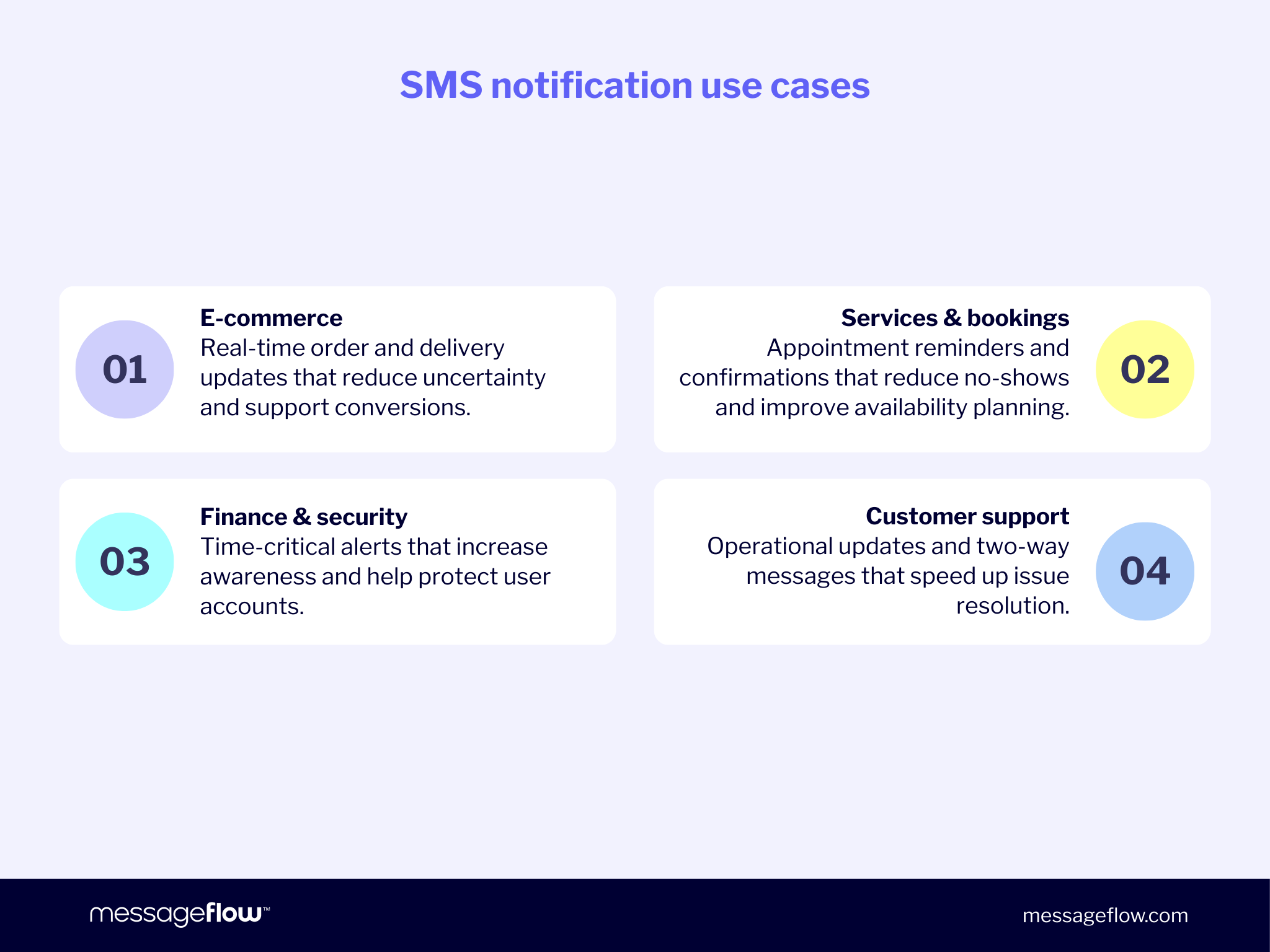
E-commerce
In this sector, SMS is commonly used to communicate order statuses, shipment updates, shipping notifications, and delivery notifications, as well as delivery date changes.
For example, SMS notifications can inform customers that an order has been shipped and provide an estimated delivery time. Various shipping notifications are an example of transactional SMS messages that keep customers informed in real time about their order status and delivery progress.
For customers, this means greater transparency throughout the purchase process. For businesses, fewer incoming inquiries and complaints.
More broadly, this channel helps e-commerce companies engage customers and support sales growth. They often use web forms to collect customer contact information and opt-ins for SMS campaigns.
Services and bookings
Appointment reminders, booking confirmations, and schedule change notifications help reduce no-shows and make it easier to manage availability. Using SMS to remind customers of upcoming appointments ensures timely attendance and improves communication. Reservation reminders are also a key feature for service-based businesses, helping to further reduce no-shows and optimize their operations.
Finance and security
In this area, transactional SMS notifications serve two key purposes: informational and protective.
Their goal is to immediately draw the recipient’s attention to an event that requires action, or at least awareness, such as a security-related change or transaction activity. These notifications play a crucial role in account security by providing timely alerts that help protect user information and reinforce safe practices.
Customer support
Short operational messages used in customer support allow users to quickly understand what’s happening without needing to log in to a system or contact support. Customer support teams can also receive messages from users, leading to faster resolution of issues and making SMS notifications a true two-way communication channel.
There are a few ways you can leverage SMS in customer support, including using customer data such as a name or reference details to enable automatic message completion and help build stronger relationships with recipients. In addition, communication can feel more personal, further enhancing the customer experience.
Best practices for sending SMS messages
When sending SMS messages as part of your customer comms strategy, following a set of best practices can significantly improve both deliverability and engagement.
Effective SMS messaging goes beyond just reaching customers. It involves making sure your messages are timely, relevant, and welcomed. Here are some essential guidelines to maximize the impact of your texting campaigns:
- Obtain clear consent: Always ensure customers have opted in to receive SMS messages from you. This builds trust and helps you comply with regulations.
- Keep messages clear and concise: SMS messages have a limited character count, so focus on delivering your message in a straightforward and actionable way. Avoid unnecessary jargon and get straight to the point.
- Personalize when possible: Use customer data to personalize messages. This may include the recipient’s name or referencing recent interactions. Personalized SMS messages are more likely to capture attention and drive action.
- Send messages at appropriate times: Timing matters. Avoid sending SMS late at night or during off-hours. Schedule your messages to reach customers when they are most likely to engage.
- Include a clear CTA: Every SMS should have a clear purpose. Whether it’s confirming an appointment, providing a discount code, or sharing a delivery update, make sure customers know exactly what to do next.
- Identify your business: Use a recognizable sender name or short code so customers immediately know who the message is from. This increases trust and reduces confusion.
- Respect frequency and relevance: Don’t overwhelm customers with too many messages. Focus on sending SMS only when the information is important, time sensitive, or adds real value.
- Provide opt-out options: Make it easy for customers to unsubscribe from SMS messages if they choose. This demonstrates respect for their preferences and helps maintain a positive brand image.
- Test and optimize: Regularly review the performance of your SMS campaigns. Use A/B testing to refine message content, delivery time, and targeting to continually improve results.
Why businesses treat SMS as a critical channel for customer experience
Business SMS notifications play such an important role not because they’re simple or familiar, but moreso because they fill a very specific gap in communication. SMS operates independently of mobile apps, email inboxes, and individual user habits.
Its greatest strength lies in predictability: the message arrives in a familiar format, in a familiar place, at scale, and without unnecessary barriers.
This is why SMS is often treated as the final and most dependable point of contact for high-priority communication. SMS notifications are especially valuable for delivering important messages that must not be missed, ensuring recipients are promptly informed when it matters most.
From an organizational perspective, this makes it possible to design communication that doesn’t rely on assumptions about user behavior, but on a high likelihood of the message actually being received and noticed.
Maintaining accurate contact lists is essential to make sure that critical notifications and important messages reach the right recipients every time. In this sense, SMS acts as a “failsafe” for the entire process – a channel used in situations where a missing or overlooked message could create real operational, financial, or reputational risk.
How to grow SMS communication within your organization
For many companies, SMS notifications are the first step toward more structured mobile communication. Over time, the natural direction of growth is bulk SMS messaging, leveraging automation features such as scheduled messages, templates, and auto-replies to scale communication efficiently.
Incorporating these capabilities helps you create better workflows and improve operational efficiency as they integrate SMS into a broader omnichannel strategy. It’s worth noting that SMS message templates can be reused across future campaigns, helping you save time and improve operational efficiency.
At this stage, SMS stops being a standalone tactic and becomes a permanent part of communication processes, working alongside email, mobile push notifications, and other channels as part of an integrated approach to customer engagement.
Mature use of SMS does not mean simply increasing message volume but rather embedding it more intelligently into the greater customer journey. As a marketing channel and a carrier of essential information, SMS becomes most valuable when triggered at clearly defined moments, where its directness and clarity genuinely enhance the effectiveness of the entire communication flow, rather than duplicating or disrupting it.
FAQ
Although SMS is one of the most widely recognized communication channels, decisions about using it to deliver critical information are still often based on simplifications or intuition rather than clear criteria.
The questions and answers below address the most common doubts companies have when evaluating whether SMS truly adds value or whether another form of communication might be a better fit.
No, provided they are sent in a justified context and relate to information that is genuinely relevant to the recipient. Timing and relevance are key. SMS works best when the user expects the message or when receiving it clearly helps them take the next step.
Following SMS best practices, such as obtaining opt in from recipients, ensures messages are well-received and compliant with regulations.
Yes, it can. However, it delivers the greatest value when used as part of a broader, coherent communication ecosystem.
In practice, SMS excels at point-based, operational communication, while other channels are better suited for longer-form content or messages that require additional context.
SMS may not be the optimal option when communication requires detailed explanations, visual context, or is not time-sensitive.
In such cases, email or push notifications allow information to be delivered in a less intrusive way and in a format better aligned with the underlying business goal.