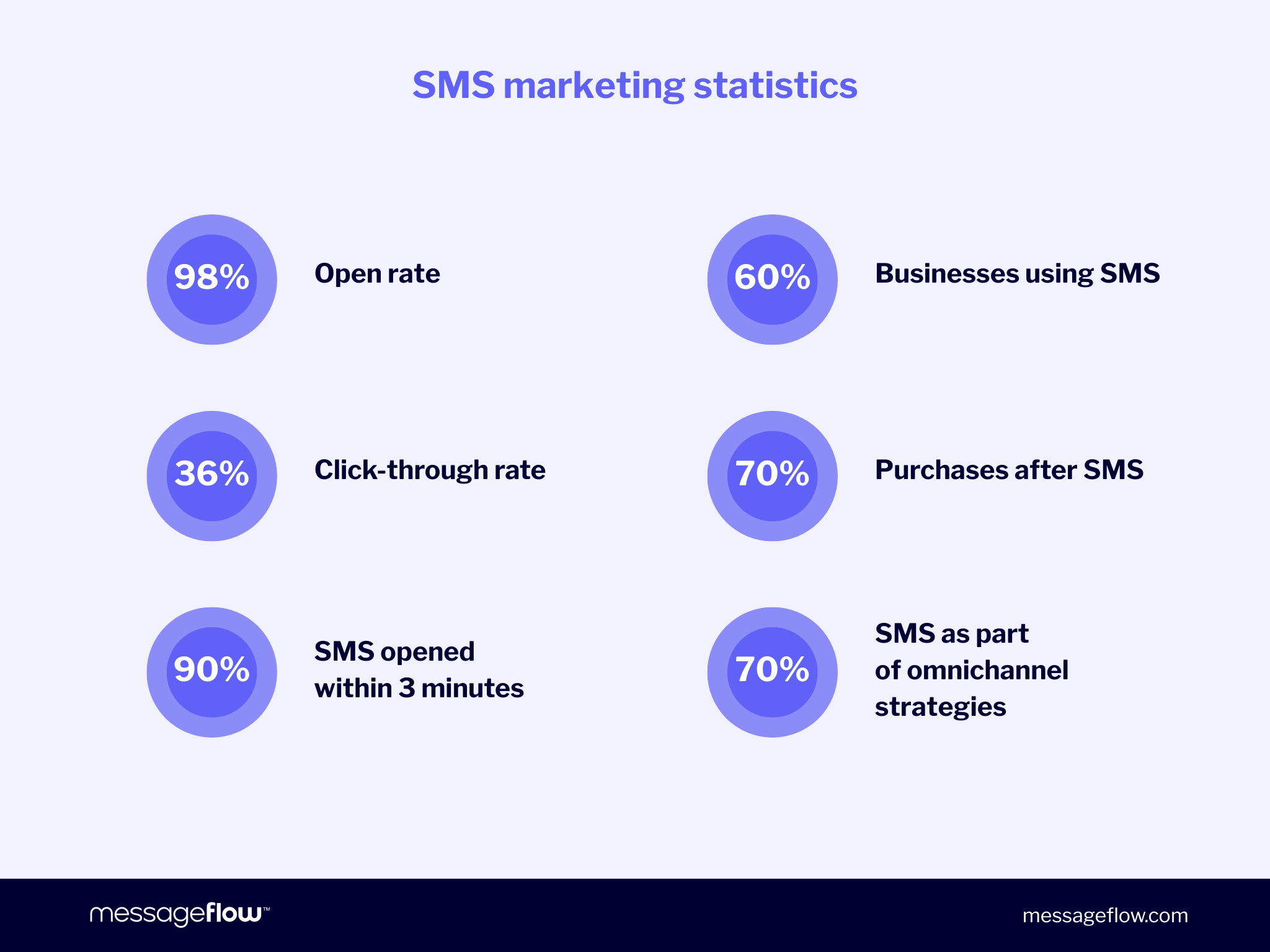
SMS communication is one of the fastest and most effective ways to reach customers. Industry analyses consistently show that SMS marketing campaigns achieve open rates of around 98%, with nearly 90% of text messages read within three minutes of delivery.
So where does the problem arise? SMS for business is an exceptionally direct channel – text messages land straight on a customer’s personal phone screen. That immediacy leaves little margin for error. When planning SMS campaigns, there is no room for random or careless decisions.
Sending messages at the wrong time, communicating too frequently, or using an unclear sender name can quickly backfire. Instead of sparking interest, these SMS mistakes create irritation. Instead of driving conversions and building lasting customer relationships, they push customers to opt out of SMS communication altogether.
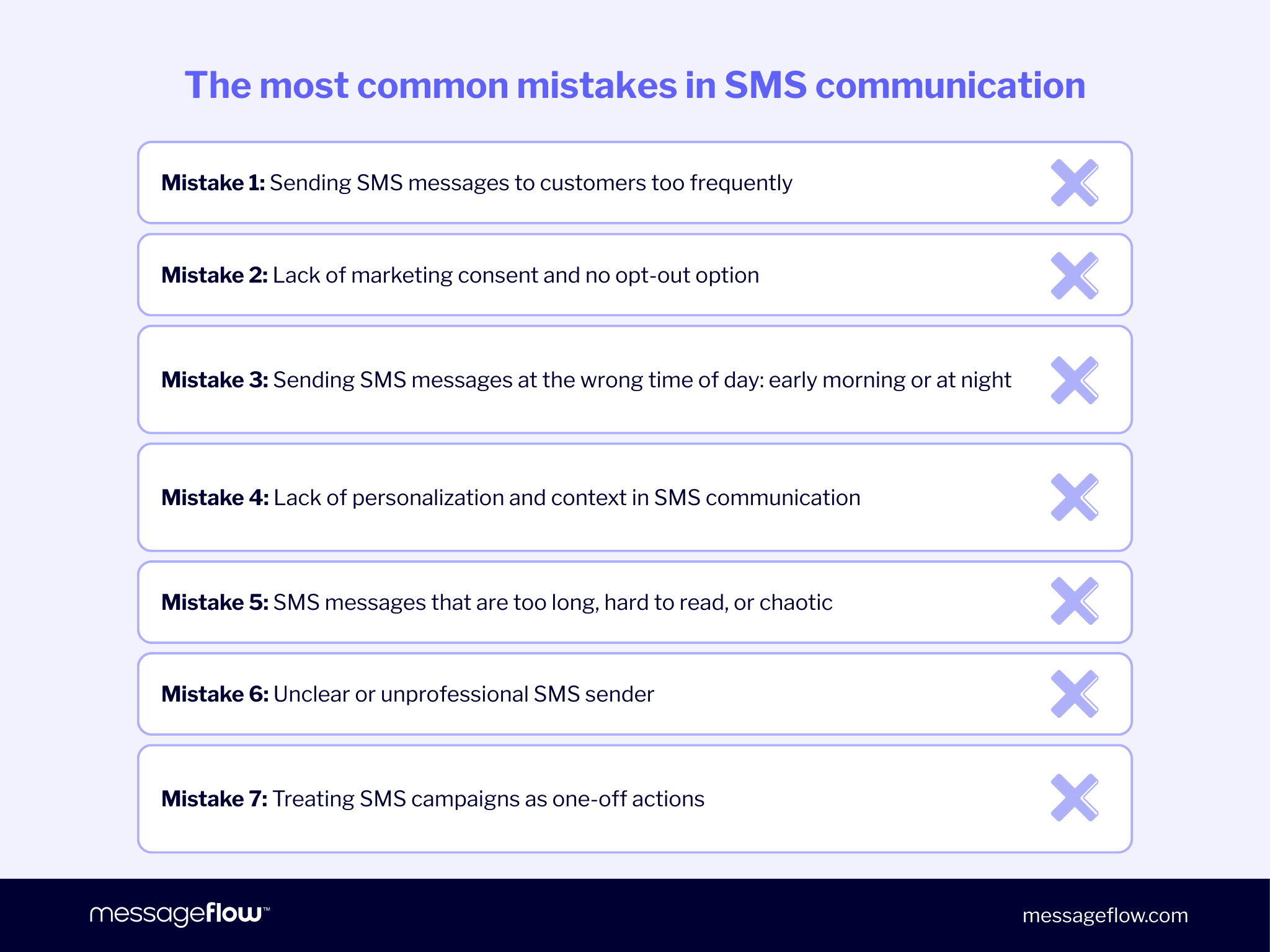
In this article, we break down the seven most common SMS mistakes in customer SMS communication and share clear, practical guidance on how to avoid them by following proven SMS sending best practices.
Key takeaways: SMS mistakes to avoid and SMS sending best practices to follow
- SMS marketing campaigns achieve open rates of over 98%, but they appear directly on a customer’s private phone screen. As a result, any mistake in SMS communication is far more noticeable than in email or social media channels.
- The most common SMS mistakes include sending messages too frequently, choosing the wrong delivery time, failing to collect proper consent or provide an opt-out option, lack of personalization, overly long text messages, and an unclear or inconsistent sender identity.
- In many cases, simply organizing and standardizing internal communication rules – without increasing text message volume – is enough to significantly improve SMS campaign performance.
- A professional SMS communication platform (such as MessageFlow) helps teams apply SMS sending best practices by controlling delivery frequency, segmenting audiences, managing marketing consents, and planning SMS campaigns more effectively.
- At the end of the article, you will find an SMS FAQ section addressing the most common questions from marketers, including optimal sending frequency, ideal SMS length, whether nighttime SMS campaigns make sense, and how to prevent messages from appearing spammy.
Why SMS communication is effective but sensitive
In USA and Europe, SMS communication achieves open rates of 95–98% and is typically read within three minutes of delivery. According to CPaaS industry research, SMS marketing can deliver conversion rates up to 45% higher than those of other mobile channels. This performance explains why SMS for business is so widely used across industries such as e-commerce, retail, and SaaS.
At the same time, SMS remains an exceptionally sensitive channel. Text messages land directly on a user’s private phone screen, alongside conversations with family and friends. Unlike email, which can be easily ignored in an overcrowded inbox, SMS almost always captures attention. This means that any misstep: sending at the wrong time, contacting users too often, or lacking clear context, is felt much more strongly.
Poorly structured SMS communication quickly leads to opt-outs, number blocking, and a decline in brand trust. Data from the 2024 Sinch report shows that with bad practices, opt-out rates can reach as high as 5–10%.
The goal of this article is to discuss seven specific mistakes in business SMS communication and to highlight proven SMS best practices.
Platforms such as MessageFlow support SMS campaigns, bulk messaging, and omnichannel communication, making it easier to apply SMS sending best practices in real-world SMS for business use cases. From audience segmentation and message scheduling to consent management and contact frequency control, these tools help companies reduce SMS mistakes while improving the performance and consistency of their SMS communication.
Mistake #1: Sending SMS marketing messages too frequently
What this SMS mistake looks like
Some companies send SMS marketing messages almost every day – or several times a week – without a clear strategy behind the frequency. This pattern becomes especially common during high-pressure sales periods such as Black Friday, holiday campaigns, or seasonal promotions.
At first glance, sending a text message to the entire database for every promotion can feel like a fast path to higher sales. In reality, excessive SMS frequency usually delivers the opposite result.
Why sending SMS messages too often reduces effectiveness
According to a 2023 MobileSquared study, sending more than four SMS marketing messages per week can increase opt-out rates by up to 300%. At the same time, engagement drops sharply – from an average of 25% to just 8%.
When SMS communication becomes too frequent, the most common consequences include:
- Growing recipient irritation and a rapid rise in opt-outs
- Customers blocking the sender’s number directly on their phones
- Declining engagement, even when offers are genuinely attractive
- Weaker performance of future campaigns, including across other channels
Once trust and attention are lost, it becomes significantly harder – and more expensive – to win them back.
How to avoid this SMS mistake: SMS sending best practices
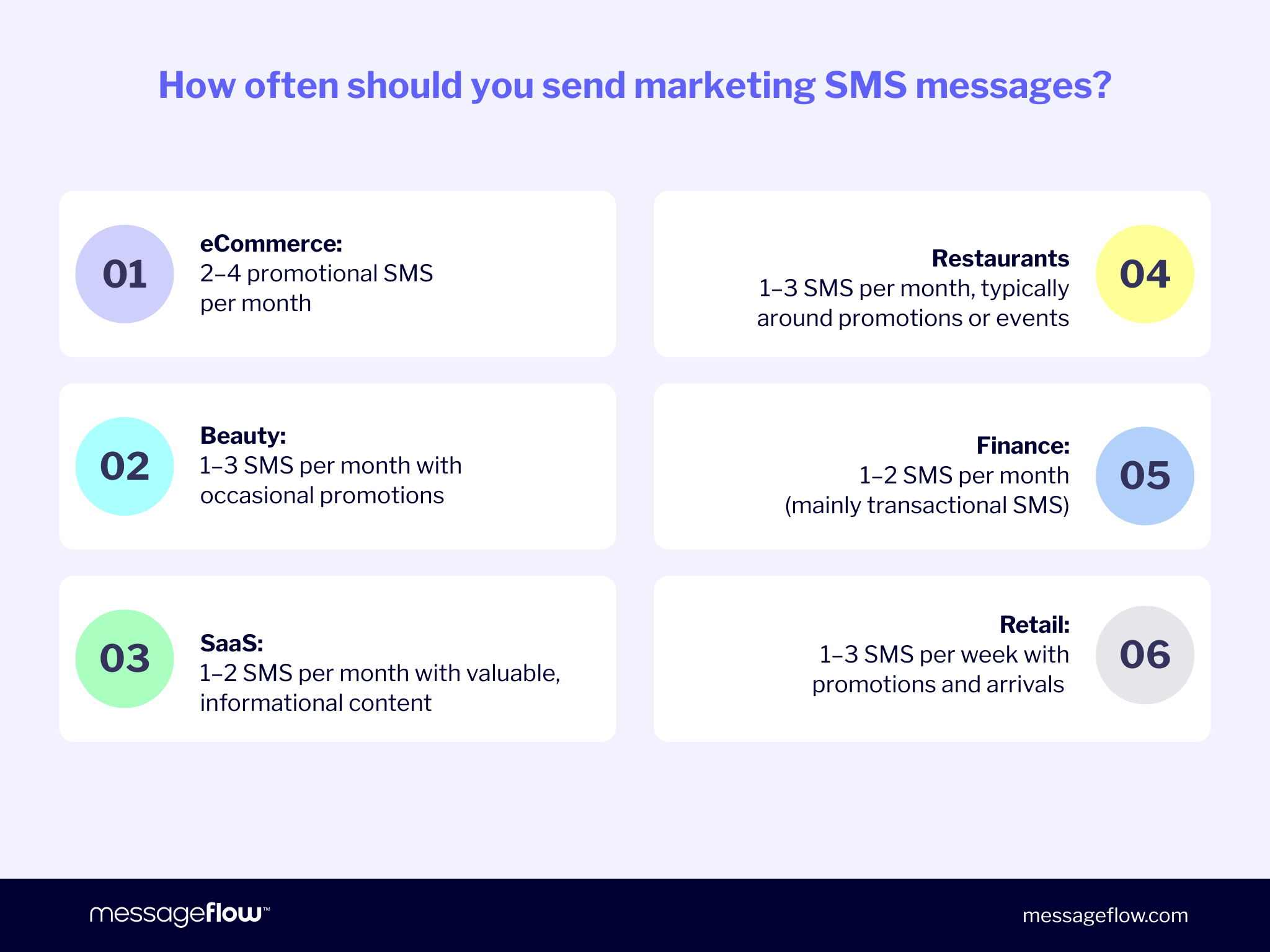
There is no universal SMS frequency that works for every business or audience. Transactional or time-sensitive text messages may require higher volume, while promotional campaigns demand far more restraint.
| Industry | Recommended frequency | Best practices |
|---|---|---|
| E-commerce | 2–4 SMS marketing messages per month + transactional notifications | Keep message volume moderate to avoid overwhelming users, while still reminding them about promotions, abandoned carts, and order statuses. |
| Beauty & wellness | Mainly appointment reminders + occasional promotions (1–3 per month) | Focus on booking and service reminders; limit sales campaigns to prevent message fatigue. |
| SaaS | 1–2 SMS marketing messages per month with valuable, contextual information | Use SMS as a complement to email – for webinar reminders, product updates, or critical deadlines. |
| Food & beverage | 1–3 SMS marketing messages per week | SMS marketing works well for happy hours, last-minute reservations, and time-sensitive offers. |
| Fitness & wellness | 1–4 SMS marketing messages per week | Class reminders, membership offers, and motivational text messages perform well when they deliver clear, practical value. |
| Travel & tourism | 2–4 SMS messages per month | Reservation confirmations, check-in and check-out alerts, last-minute offers, and event reminders. |
| Finance | 1–3 SMS messages per month, primarily transactional or security-related | Transactional and security text messages should clearly outweigh marketing communication. |
| Healthcare | 1–3 SMS messages per month | Focus on appointment reminders and educational alerts; use promotional SMS cautiously. |
| Retail | 1–3 SMS messages per week | In-store promotions, product launches, and event invitations. Always consider local time zones and sending hours. |
Additional best practices for managing SMS frequency
- Establish a clear SMS frequency policy within the marketing team
- Define organization-wide rules for bulk SMS campaigns
- Segment recipients – for example, active vs. inactive users
- Adjust frequency by audience segment, not just by campaign type
Mistake #2: Missing marketing consent and no opt-out option
What this mistake looks like
Despite clear regulations, some companies still send messages without properly obtained marketing consent or rely on purchased phone number databases. These practices not only violate GDPR and electronic communications laws, but also seriously undermine trust in SMS communication.
From the recipient’s perspective, an unsolicited text message is simply spam – regardless of the sender’s intentions or the quality of the offer. In SMS for business, consent is not a formality; it is the foundation of credibility.
Why this reduces effectiveness
Failing to collect proper consent and provide a clear opt-out option creates significant risk for SMS campaigns, including:
- Financial penalties – up to 4% of annual global turnover under GDPR
- Complaints filed with regulators and telecommunications authorities
- Sender ID blocking by mobile operators
- Loss of customer trust from users who feel aggressively “spammed”
According to a 2024 Experian study, 68% of consumers opt out of further SMS communication after receiving a message that does not include a clear unsubscribe option. This is one of the most damaging SMS mistakes a brand can make.
How to avoid this mistake: SMS sending best practices
Effective SMS communication starts with transparent, well-documented consent collection. Proven SMS sending best practices include:
- Online forms with a clear, explicit checkbox for SMS marketing consent
- A double opt-in mechanism that confirms consent via SMS communication
- Clear information about the purpose and expected frequency of text messages
Every marketing message should also include a simple opt-out instruction, such as “Reply STOP to unsubscribe” or a link to a preference management page. The opt-out process should be automatic and reflected in the contact database immediately.
Platforms like MessageFlow support compliant SMS communication by enabling consent management, subscription control, and automatic enforcement of opt-outs across all SMS campaigns. Two-way messaging ensures STOP replies are processed instantly, without manual intervention.
Mistake #3: Sending text messages at the wrong time of day
What this SMS mistake looks like
Sending SMS messages early in the morning (before 8:00 a.m.), late in the evening (after 9:00 p.m.), or overnight is almost always perceived as intrusive. In SMS communication, timing matters as much as content.
Even the most compelling offer cannot compensate for the frustration of being woken up by a text message.
Why this reduces effectiveness
MessageFlow analysis shows that SMS campaigns perform best when text messages are sent:
- Tuesday through Thursday
- Between 10:00–12:00 and 6:00–8:00 p.m.
By contrast, SMS messages sent after 10:00 p.m. achieve an average open rate of around 12%, while messages sent during optimal daytime windows can reach open rates of up to 90%.
It is standard practice to avoid marketing SMS outside of 9:00 a.m.–8:00 p.m. on business days. Extra caution is also advised when planning campaigns on Sundays and public holidays.
How to avoid this mistake: SMS best practices
Optimal sending times vary by industry and use case:
- Restaurants: lunch offers (10:00–11:00), evening reservations (4:00–6:00 p.m.)
- eCommerce: strongest results in the afternoon and early evening
- B2B: standard business hours (9:00 a.m.–5:00 p.m.)
Rather than relying on assumptions, test different time windows on smaller audience segments. Gradual optimization protects engagement while improving performance across your entire contact base.
Mistake #4: Lack of personalization and context in SMS communication
What this mistake looks like
One of the most common issues is sending the same generic SMS to a broad audience – without using the recipient’s name, referencing past interactions, or explaining why the message is relevant.
A classic example: “SUPER DEAL! –15% on everything, today only.”
Messages like this feel like mass SMS blasts and rarely generate meaningful engagement.
Why this reduces effectiveness
According to a 2024 Attentive study, personalized SMS messages can generate up to 45% more revenue than generic communication.
When personalization is missing, the result is often:
- SMS messages perceived as spam
- No clear reason for receiving the message at that moment
- Significantly lower click-through rates
- Reduced brand credibility
How to avoid this mistake: SMS best practices
Effective SMS personalization does not need to be complex. Proven approaches include:
- Using the recipient’s first name when available
- Referencing interest categories or purchase history
- Triggering messages based on events such as abandoned carts, expiring subscriptions, or account milestones
- Tailoring discount codes or offers to individual behavior
SMS also works well as a complement to email – for example, reminding recipients about an important message or confirming order status.
Choosing a communication platform that supports dynamic fields and segmentation based on transactional data, preferences, and user activity makes personalization scalable and consistent across campaigns.
Mistake #5: SMS messages that are too long, unclear or chaotic
What this SMS mistake looks like
While it is technically possible to send multi-part messages, texts that exceed 160 characters (or 70 characters when using special characters) become difficult to scan quickly. SMS communication works best when the message is immediately clear.
Common signs of this SMS mistake include:
- Multiple offers packed into a single message
- No clear call to action (CTA)
- Complicated or hard-to-read promotion rules
- Excessive use of capital letters and punctuation (“HUGE DEAL!!!”)
Why this reduces effectiveness
Industry benchmarks show that messages between 100–140 characters typically perform best, achieving click-through rates up to 10% higher than longer SMS campaigns.
Overly long or chaotic messages often lead to:
- Text message truncation on certain devices
- Recipient frustration due to unclear priorities
- Higher delivery costs, as each additional 160 characters counts as a separate SMS segment
How to avoid this mistake: SMS best practices
A clear and effective message in SMS communication should follow a few simple rules:
- One primary goal per text message
- One clear CTA (e.g. “Use code SAVE20 by 04/03/2026”)
- A clearly defined time limitation
- A clean, short link to further details
Terms and conditions, full product descriptions, and complex rules should live on a landing page. The role of SMS for business is to prompt action – not to replace a website or sales page.
Mistake #6: An unclear or unprofessional SMS sender
What this mistake looks like
For many recipients, the decision to open an SMS is made in a fraction of a second – based solely on the sender field. If it displays a random phone number or an unclear abbreviation, the message immediately feels suspicious or spam-like.
According to Klaviyo research, 52% of users block messages from unknown senders, often without reading the content at all.
Why this reduces effectiveness
An unclear or inconsistent sender identity leads to:
- Lower open rates
- Higher rates of spam reports and blocking
- Loss of trust – even for critical text messages such as payment confirmations, one-time passwords, or login alerts
- Missed opportunities to reinforce brand recognition
Once credibility is lost at the sender level, text message quality becomes irrelevant.
How to avoid this mistake: SMS best practices
Effective SMS communication starts with a clear, professional sender identity. Best practices include:
- Consistently using a single, recognizable brand name as the sender
- Avoiding abbreviations or internal “code names” customers may not recognize
- Keeping sender identity consistent across SMS, email, and website communication
- Using a dedicated branded sender ID instead of a random phone number
In some cases, it makes sense to separate communication streams – for example, one sender for transactional messages and another for marketing – as long as the distinction is intuitive and clearly communicated.
Modern SMS platforms allow businesses to configure branded sender IDs, ensuring messages are recognizable, trustworthy, and clearly differentiated from spam.
Mistake #7: Treating SMS campaigns as one-off blasts
What this mistake looks like
Some companies treat SMS communication as a “one-and-done” channel – sending mass messages to their entire database for every promotion, without planning, segmentation, testing, or performance analysis. In this model, SMS communication becomes a blunt promotional tool rather than a strategic communication channel.
Why this approach reduces effectiveness
According to the 2024 GSMA report, this approach can lead to spam complaint rates as high as 15%. In practice, these SMS mistakes result in:
- Rapid fatigue across the contact database
- Waves of unsubscribes and opt-outs
- Steadily declining click-through rates and sales in future SMS campaigns
- Wasted budget on inefficient bulk messaging
How to avoid this mistake: SMS sending best practices
Effective SMS communication requires a long-term, strategic mindset. Proven SMS sending best practices include:
- Building a quarterly or annual plan that accounts for seasonality and key campaigns
- Testing message content on smaller segments before full-scale sends
- Matching each message to a clearly defined audience segment
- Analyzing results after every SMS campaign and applying insights consistently
The strongest results come from SMS campaigns that are part of a broader omnichannel strategy. SMS works best as a reinforcement channel – a last-chance reminder before a promotion ends, a follow-up to email, or a step within automated customer journeys alongside mobile push, RCS, or Viber.
MessageFlow, as an SMS communication and omnichannel platform, enables scenario planning, audience segmentation, and user behavior analysis. Marketing automation allows brands to respond to customer actions in real time – transforming bulk SMS communication into relevant, high-impact messaging.
How to organize SMS communication in your company: Step by step
If you manage marketing or e-commerce and feel your SMS communication is not delivering the results it should – too frequent, poorly coordinated, or difficult to measure – this checklist is designed for you.
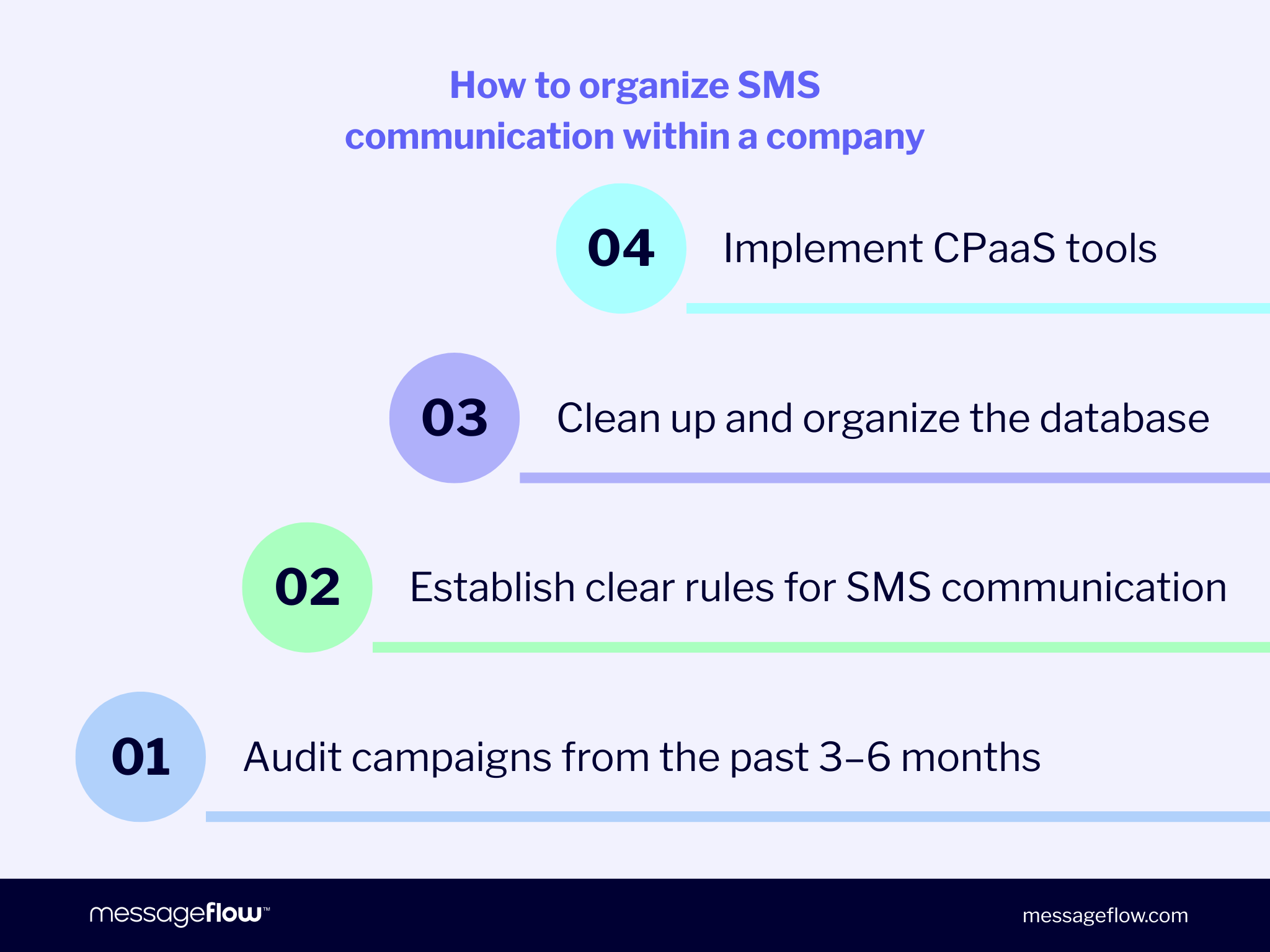
Step by step, it shows how to bring structure to SMS communication without disruptive changes, costly implementations, or pausing ongoing campaigns. The goal is simple: regain control over frequency, content, and timing – and, in doing so, improve performance, reduce opt-outs, and strengthen customer trust.
Step 1: Audit your current SMS activity
Before introducing new rules, start by understanding what is already happening.
Review your SMS activity over the past 3–6 months, focusing on:
- The total number of SMS messages sent
- Sending times and their impact on open rates and CTR
- Opt-out rates and spam complaint metrics
- Whether every message includes a clear opt-out option
At this stage, patterns usually emerge quickly. It becomes clear which campaigns delivered real value – and which mainly generated cost, fatigue, or disengagement.
Step 2: Define clear communication rules
Once you understand the current state, establish shared rules that apply across the entire organization – regardless of campaign type, urgency, or seasonality.
Clear guidelines reduce internal friction and prevent overuse of SMS during peak sales periods.
Example SMS communication framework
| Element | Recommendation |
|---|---|
| Maximum number of marketing SMS messages | 2–4 per month |
| Sending hours | 9:00 a.m.–8:00 p.m. on business days |
| Content types | Promotions, notifications, reminders |
| Integration with other channels | Supporting channel alongside email and push notifications |
These rules do not limit flexibility. Instead, they create a baseline that protects customer experience while allowing teams to plan more effectively.
Step 3: Clean and organize your recipient database
Even the best message will underperform if it reaches the wrong audience. Database quality directly affects engagement, deliverability, and compliance.
Key actions at this stage include:
- Verifying marketing consent records
- Segmenting recipients (e.g. new users, loyal customers, inactive and long-term inactive users)
- Removing invalid numbers and unsubscribed contacts
- Keeping the database continuously updated, ideally through automation
A well-maintained database enables more precise targeting and makes frequency control far easier over time.
Step 4: Implement the right tools
The final step is choosing tools that help maintain order without manual oversight of every campaign.
A professional SMS and omnichannel platform supports teams through:
- An intuitive SMS campaign builder
- A shared inbox for SMS and email communication
- Link tracking and performance measurement
- A smooth transition from simple SMS sends to automated, omnichannel scenarios
- Ongoing support during onboarding and optimization
This setup allows marketing, e-commerce, and even financial services teams to analyze user behavior continuously and optimize campaigns based on data rather than assumptions.
Bringing it all together
Organizing SMS communication is not a one-time fix. It is an ongoing process that rewards consistency and deliberate decision-making.
With the right structure in place – clear rules, a clean database, and appropriate tools – SMS becomes a reliable, high-performing channel rather than a source of churn or risk.
Platforms like MessageFlow are designed to support these best practices from day one: from consent management and segmentation to automation and performance analytics.
If you want to see how structured SMS communication works in practice – and how to avoid the mistakes outlined in this guide – book a MessageFlow demo or create a free account to explore the platform firsthand.