
Valentine’s Day email marketing remains one of the most competitive moments of the year for inbox visibility. Brands are not only competing with each other, but also with higher spam sensitivity, shorter attention spans, and rising expectations around relevance.
If you’re searching for catchy Valentine’s Day headlines, proven Valentine’s Day email subject lines, or practical Valentine’s Day email marketing ideas, this guide brings them together in one place.
Below you’ll find real Valentine’s Day email examples, explanations of why these campaigns work, and ready-to-use subject line inspiration you can adapt to your own brand—whether you’re planning a full Valentine’s Day email campaign, a one-off promotion, or a seasonal newsletter.
All of the following examples were sourced from the Really Good Emails website.
1. Oreo
Oreo demonstrates how playful branding and a clear promotional hook can work together without overwhelming the reader.
The email highlights a 15% Valentine’s Day discount using the promo code LOVE, displayed prominently at the top. Bold typography, indulgent product imagery, and a red colour palette instantly communicate both the offer and the occasion.
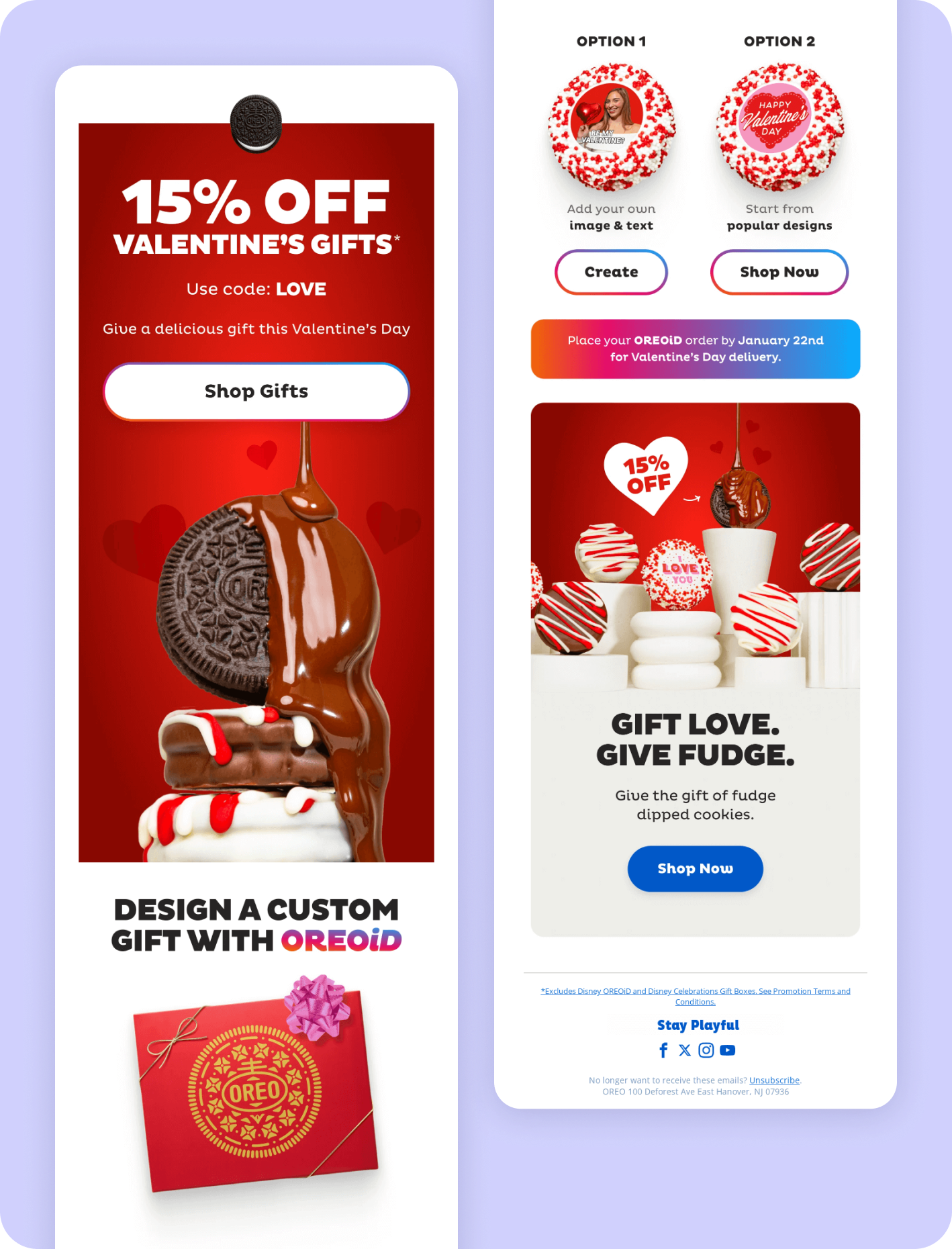
The layout follows a simple, effective structure: a strong headline, a single primary call to action, and a supporting section that introduces custom gifting options. The offer is repeated at the end to capture skimmers before they leave the email.
Why this still works today: A single, clearly communicated incentive combined with strong visual hierarchy aligns well with modern inbox behaviour, where readers scan quickly and act only if the value is immediately obvious.
2. Skims
Influencer-led campaigns can significantly amplify seasonal launches when the collaboration feels authentic. Skims’ Valentine’s collection featuring Rosé is a good example of this approach.
Soft pink tones, heart motifs, and consistent imagery featuring the collaborator create a cohesive narrative throughout the email. The message builds anticipation by introducing the Valentine’s Shop, followed by options to preview the collection or gain early access via the mobile app.
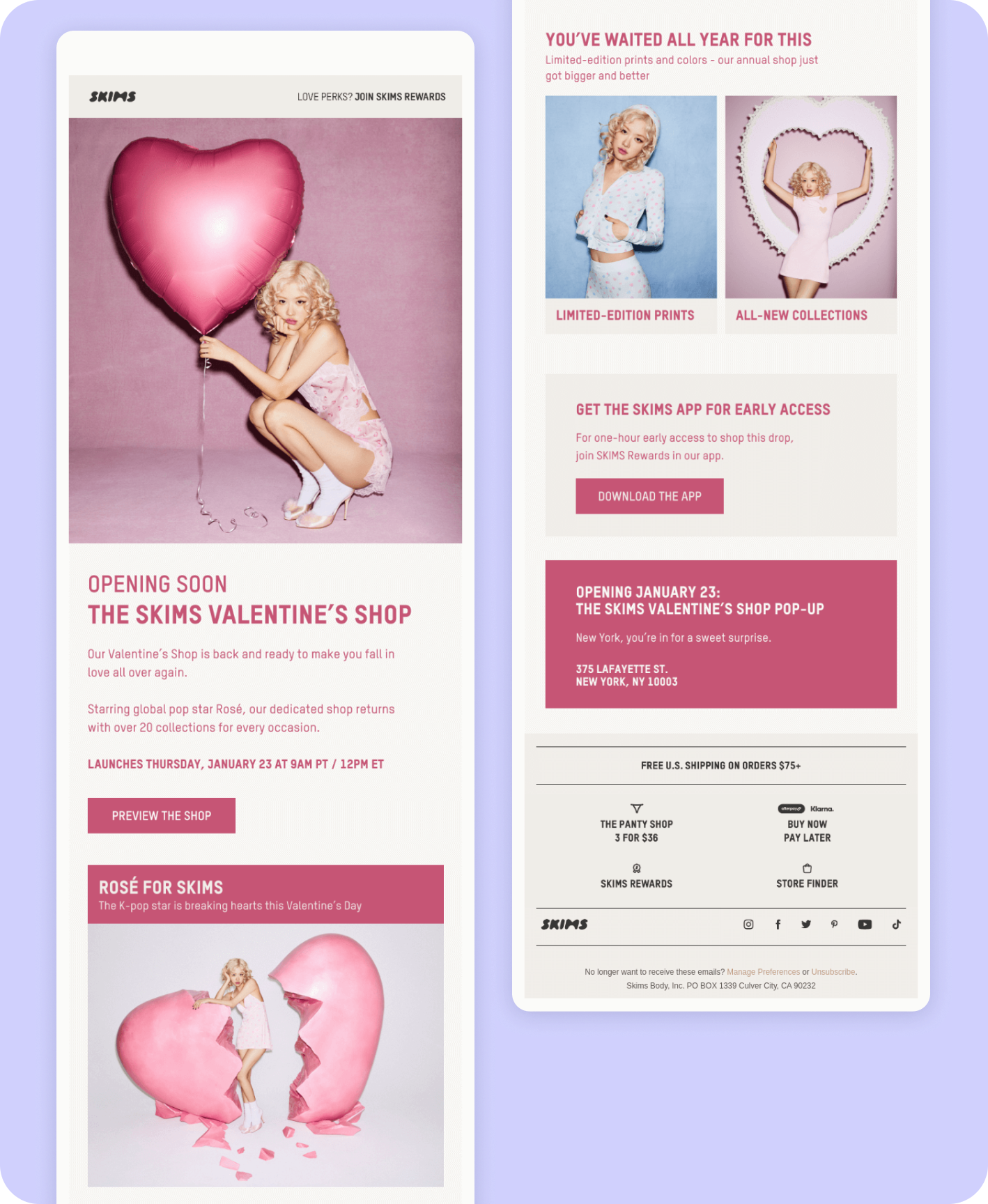
Additional details—such as a pop-up event and free shipping—are included without distracting from the main goal.
Why this still works today: Featuring a recognizable face across the entire email creates continuity and trust, while early-access mechanics support both conversion and app adoption.
3. Flings
Flings leans into humour by using playful puns that reference both romance and toaster pastries. The tone is light, energetic, and consistent from headline to call to action.
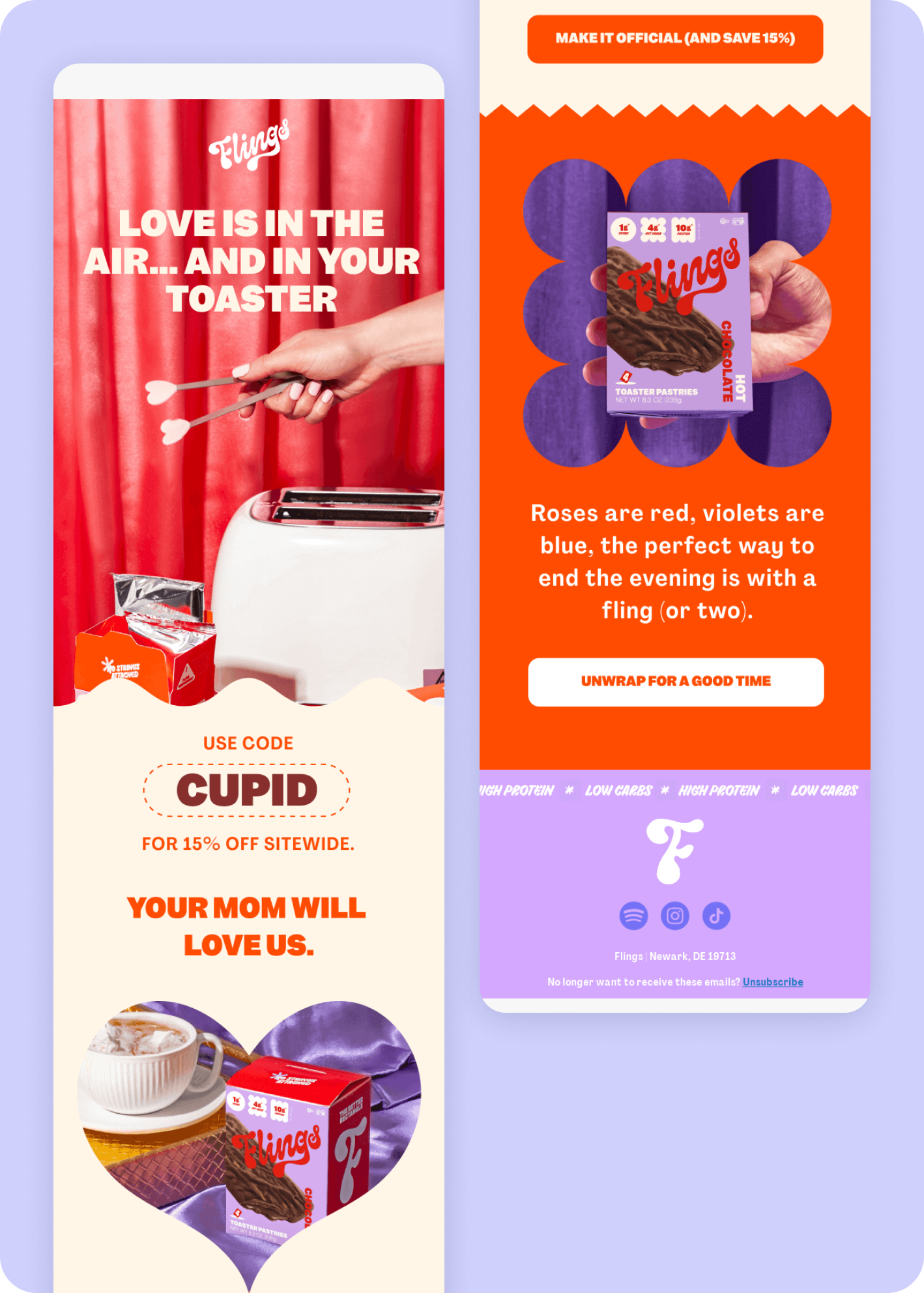
The discount code CUPID is introduced early, followed by clear product imagery and short, direct CTAs. The email avoids over-explaining and keeps the focus on one action: redeeming the Valentine’s offer.
Why this still works today: Humour can still cut through inbox fatigue—provided it doesn’t obscure the offer. Flings balances personality with clarity, which is essential for engagement.
💡 Playful Valentine’s Day emails like these perform even better when paired with a timely mobile push notification. Check out our creative push notification ideas to get inspired.
4. JENKI
JENKI takes a more narrative-driven approach by presenting a playful love letter addressed to matcha. The concept feels personal while staying firmly product-focused.
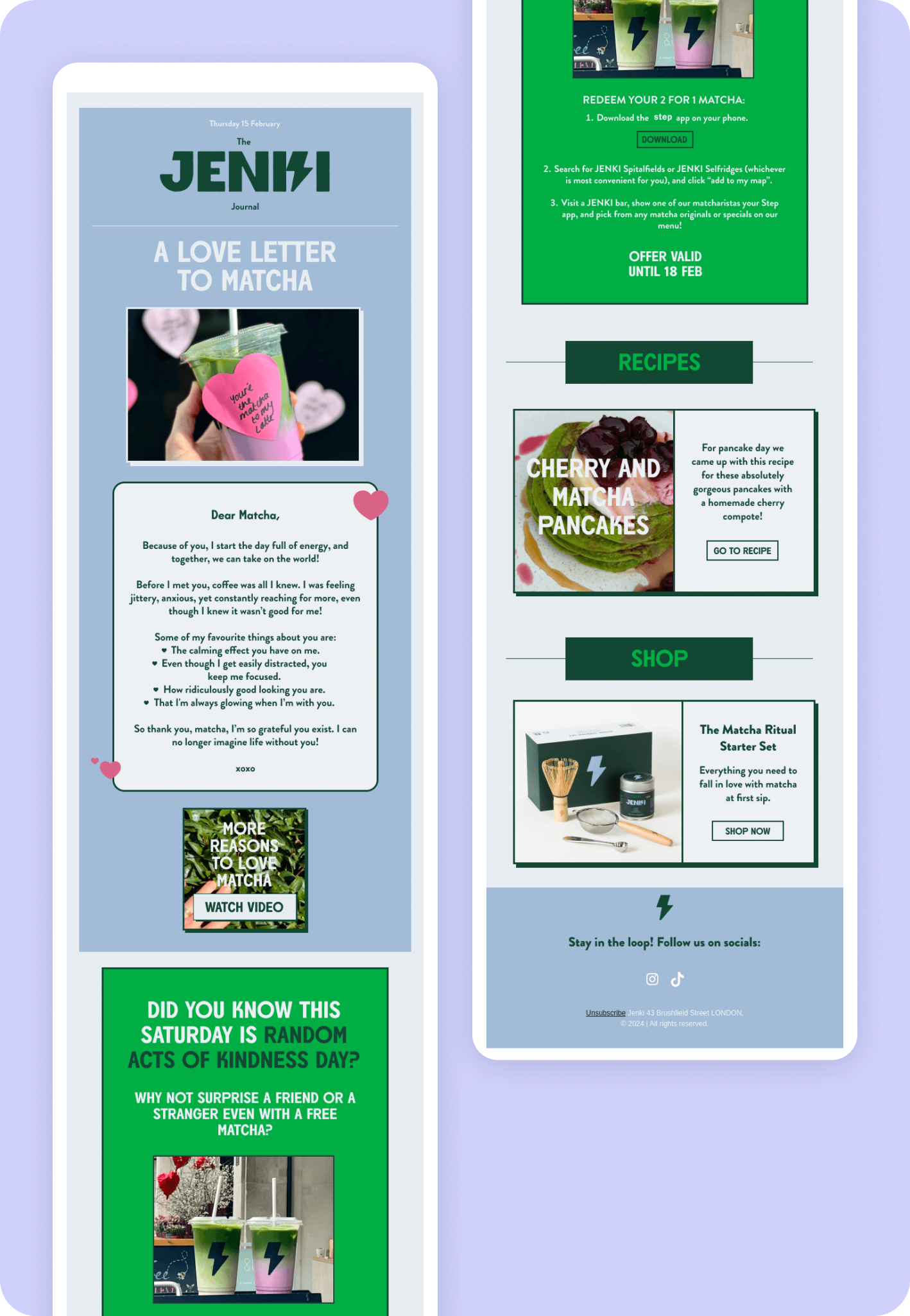
A soft, balanced colour palette supports the brand’s fresh positioning. The email flows through short sections that explain why matcha is worth loving, introduces a limited-time offer, and finishes with a seasonal recipe and a starter set recommendation.
Why this still works today: Story-driven copy helps differentiate brands in crowded inboxes, especially when paired with concise sections that respect limited attention spans.
5. Native Pet
Native Pet reframes Valentine’s Day around pet companionship rather than romantic relationships. The message is warm, inclusive, and emotionally resonant for dog owners.
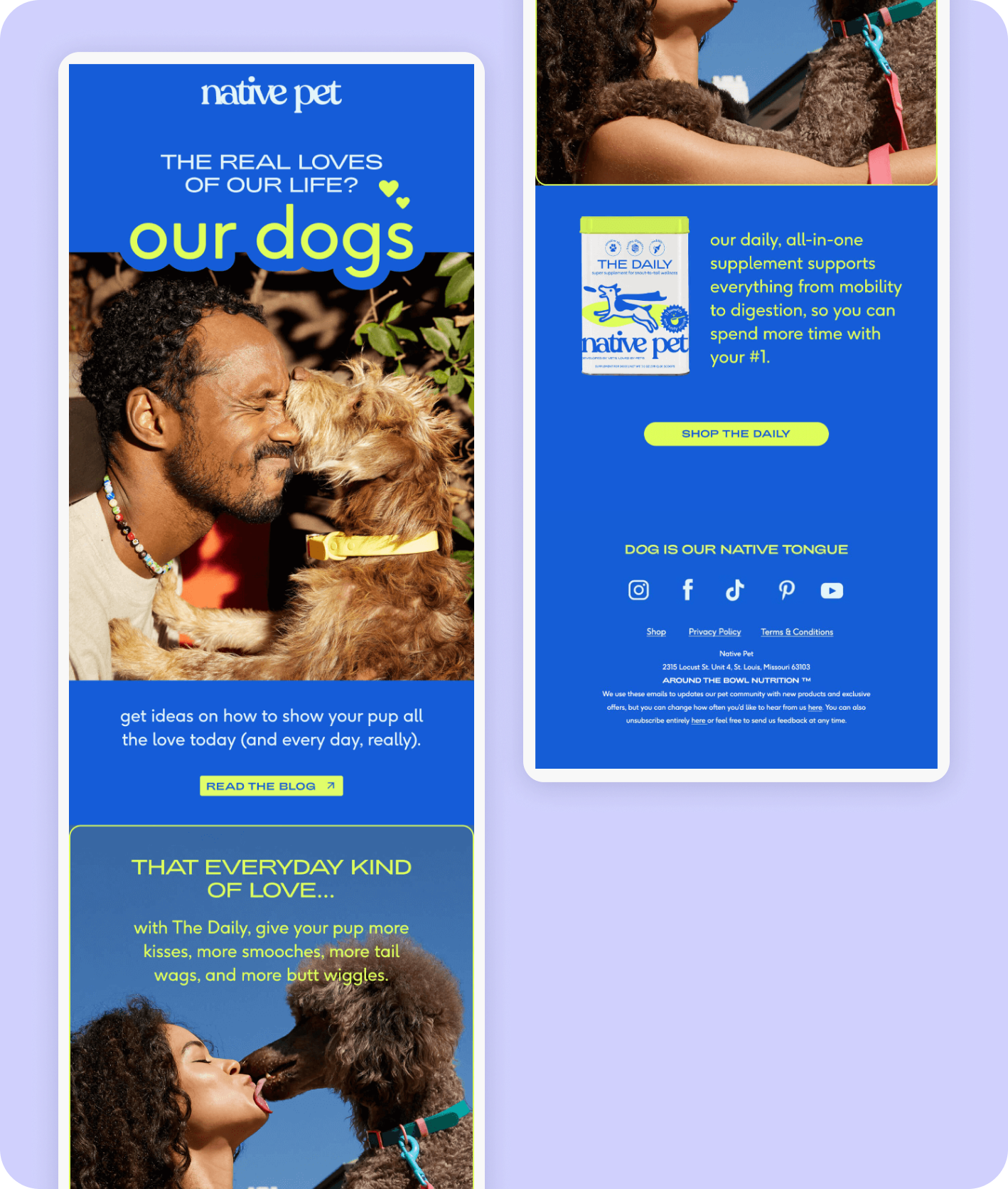
Bright visuals, short copy blocks, and joyful imagery of people with their dogs reinforce the idea that pets are family. A single product recommendation is positioned as a way to support more quality time together.
Why this still works today: Expanding Valentine’s Day beyond couples allows brands to connect with broader audiences while maintaining emotional relevance.
6. AllTrails
AllTrails positions its subscription as a long-lasting Valentine’s Day gift rather than a one-time purchase. The opening headline compares the subscription to a bouquet that lasts all year, immediately reframing expectations.
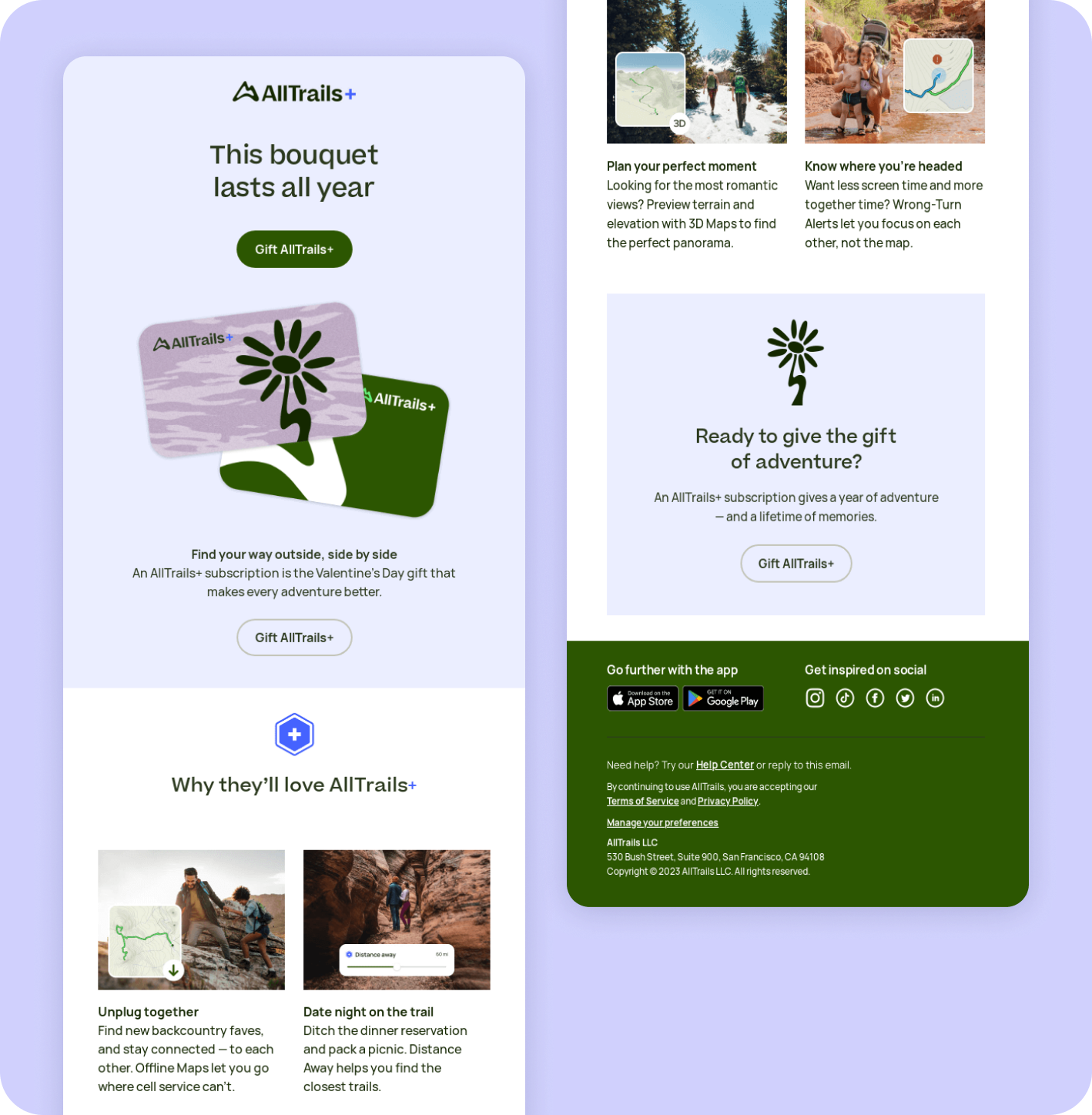
The email breaks down benefits such as offline maps and curated trails into scannable sections, supported by aspirational imagery. A clear CTA anchors the entire message.
Why this still works today: Experience-based gifts resonate strongly with consumers who value memories over material items, especially when benefits are clearly articulated.
7. Apple
Apple’s Valentine’s Day email focuses on product discovery rather than storytelling. Multiple product categories are presented as gift ideas, each with a short description and a direct CTA.
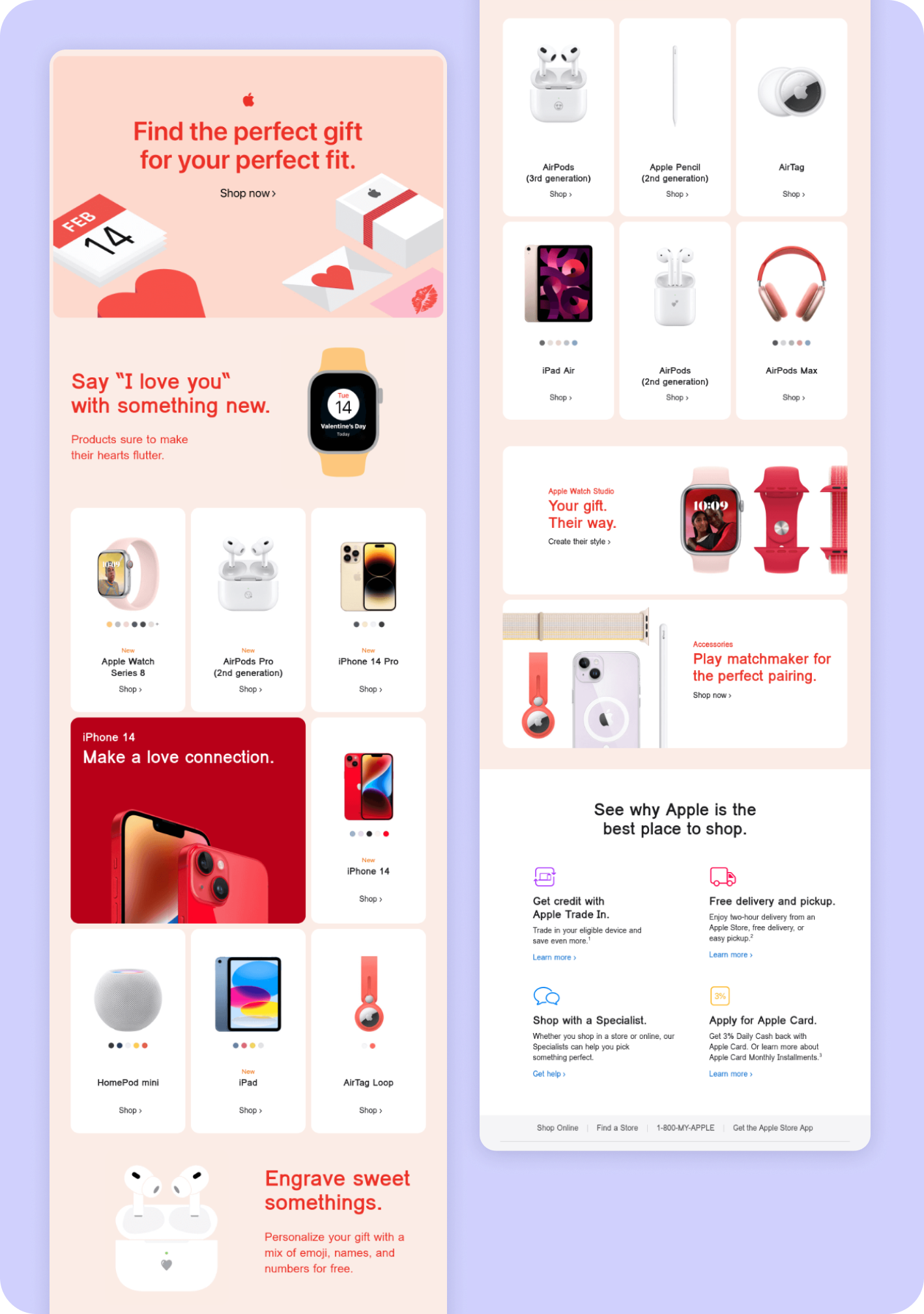
Midway through the email, Apple highlights personalisation options such as free engraving, adding emotional value without changing the core offer. The footer reinforces trust with delivery, trade-in, and support information.
Why this still works today: Clear categorisation and minimal copy make it easy for readers to self-select the right product, reducing friction in the buying process.
8. Withings
Withings keeps its Valentine’s message short and focused. The headline cleverly references both time and heart health, aligning perfectly with the brand’s product category.
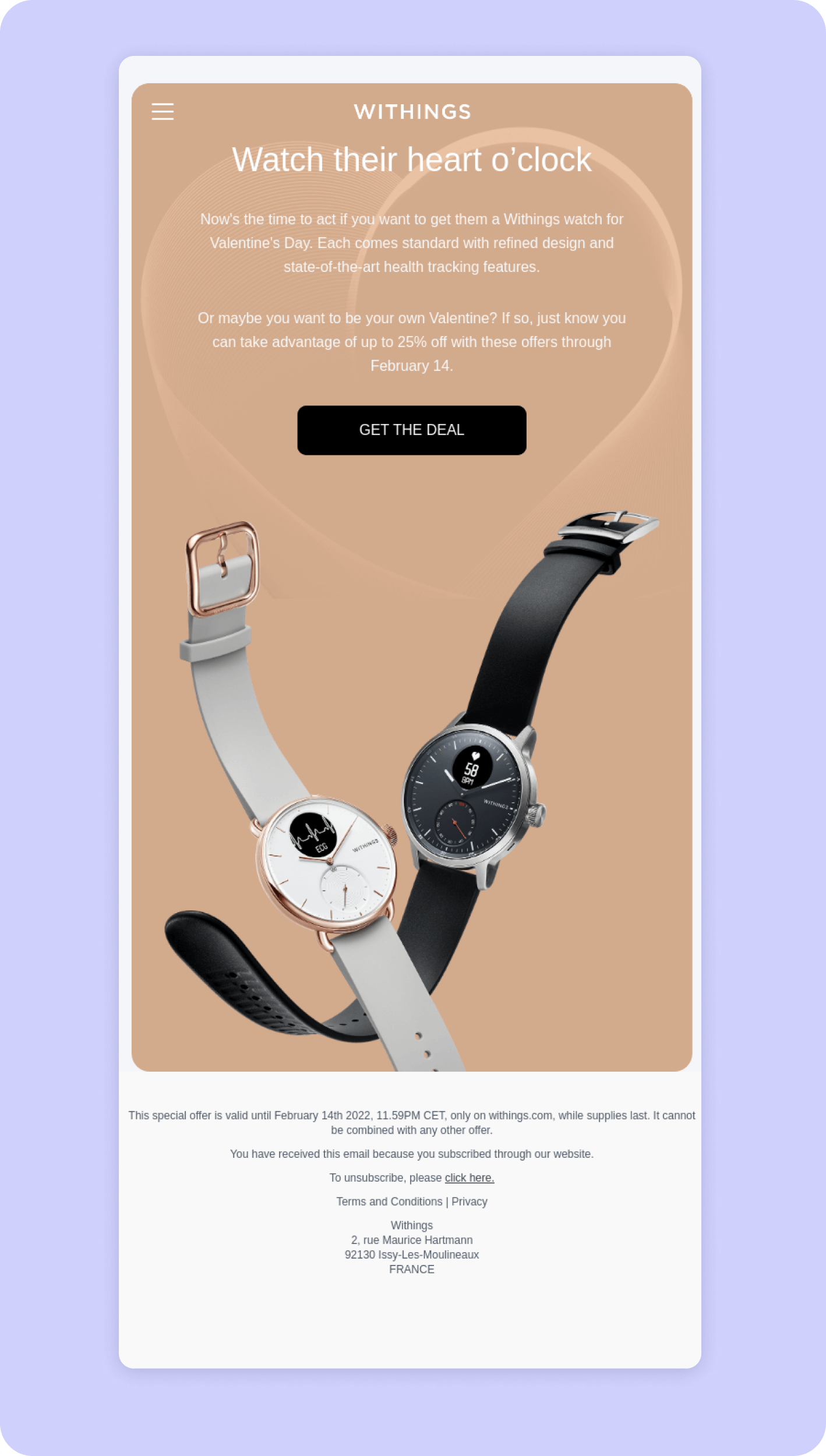
The email includes a brief list of benefits and a single CTA. The visual of two watches placed together subtly reinforces the theme of connection.
Why this still works today: Minimalist emails with one core message often outperform longer campaigns, especially on mobile devices.
9. Starbucks
Starbucks uses Valentine’s Day to highlight limited-edition products that naturally fit the season. Cherry-flavoured drinks, heart-shaped cookies, and red velvet cake create a cohesive visual story.
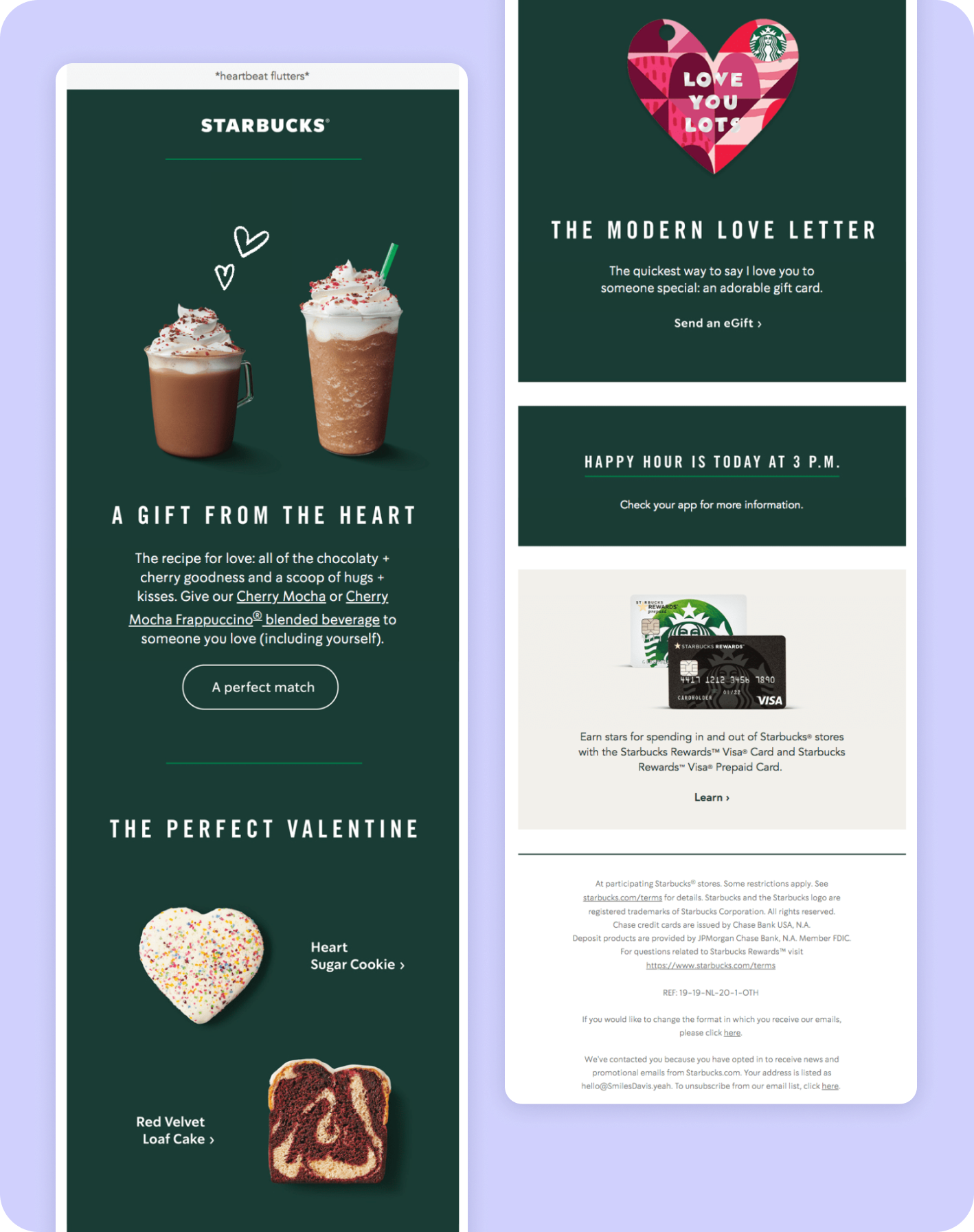
The brand also introduces gift cards as a modern alternative to traditional Valentine’s gestures, positioning them as an easy, flexible way to show appreciation.
Why this still works today: Seasonal products paired with familiar rituals make purchasing feel intuitive rather than promotional.
📨 Eye-catching, themed emails can only be effective if they reach your audience’s inboxes. Ensure your Valentine’s Day campaigns are seen by following these essential steps to improve email deliverability.
10. Urbanstems
UrbanStems takes a subtle approach by leading with new bouquet launches instead of explicit Valentine’s messaging. Romantic naming and refined photography set the tone without relying on overt holiday language.
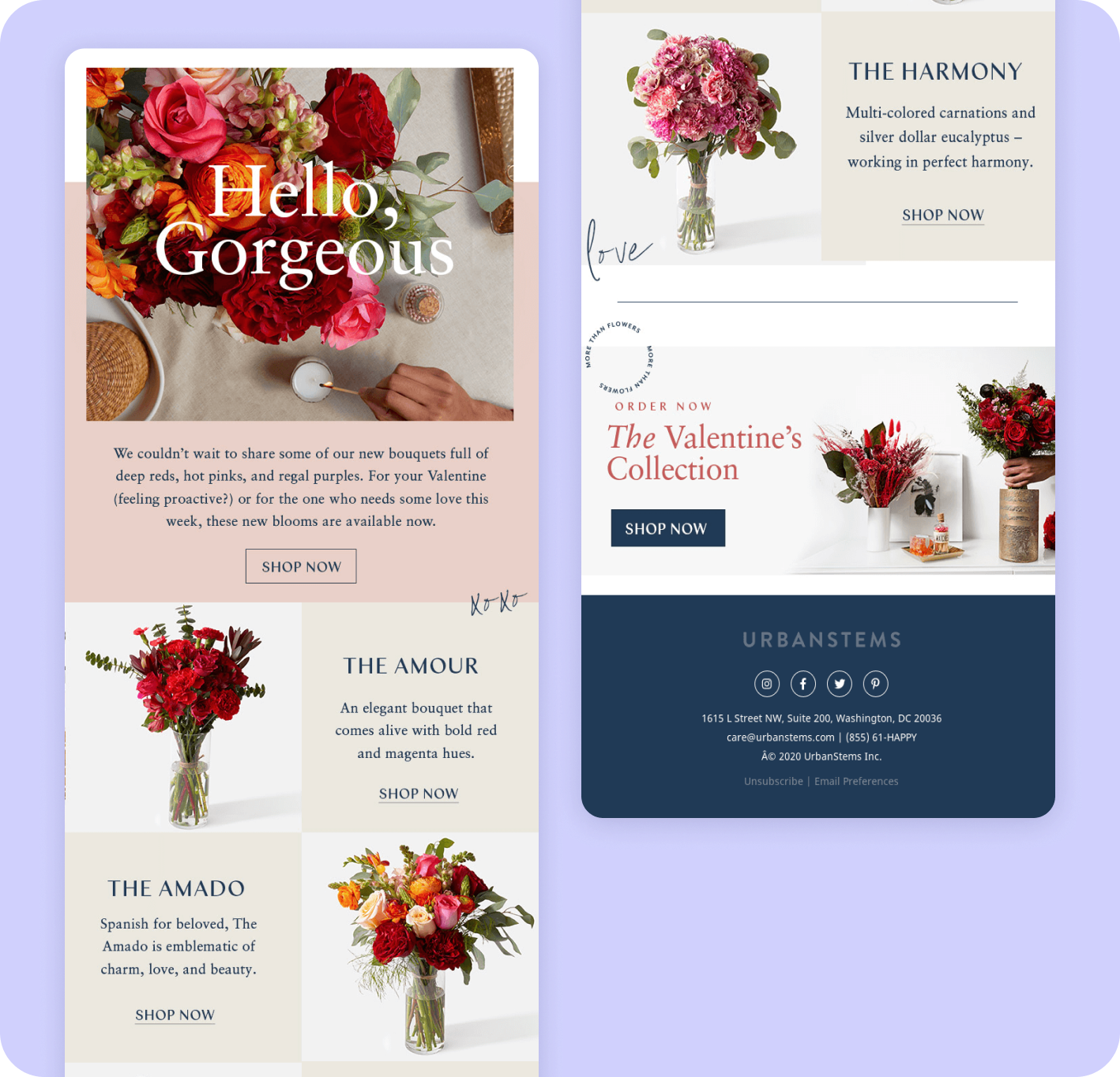
Two CTAs—one for new arrangements and one for the broader Valentine’s collection—give readers choice without overwhelming them.
Why this still works today: Soft thematic cues can feel more premium and less sales-driven, which appeals to design-conscious audiences.
What These Valentine’s Day Emails Teach Us Today
Based on these Valentine’s Day email examples, several best practices consistently drive engagement:
- Catchy headlines matter, but clarity matters more. The strongest emails combine emotional language with a clear reason to open.
- Successful Valentine’s Day email subject lines hint at value without over-promising.
- One primary call to action outperforms cluttered layouts.
- Visual hierarchy is essential for mobile-first Valentine’s Day emails.
- Subtle Valentine’s Day cues often outperform aggressive seasonal theming.
These principles apply whether you’re building a full Valentine’s Day email marketing campaign or sending a single promotional message.
Catchy Valentine’s Day Headlines and Email Subject Line Ideas
For Couples
- Spark ❤️ in Their Eyes
- Show Your Love, Spoil Them Rotten
- Cherish Them with Something Special
- Surprise Your Better Half with a Treat 🍬
- Find a Gift That Says I Love You
- Time to Celebrate Your Love Story
- A Romantic Surprise for Two
- Sweep Them Off Their Feet 💓
- Make It a Valentine’s Day to Remember
- The Gift They’ll Thank You for Again and Again
For Singles
- Treat Yourself, You Deserve It 💕
- No Date? No Problem
- Spoil Yourself This Valentine’s Day 💕
- Self-Love Just Got a New Upgrade!
- Enjoy Single Life in Style 💁
- Celebrate YOU This February
- Be Your Own Valentine
- Fall in Love with Self-Care
- All the Sweet Treats, None of the Drama 🍫
- Self-Love Is the Best Kind of Love ❤️
For Friends
- Galentine’s Day Goodies for Your Besties 💖
- Friendship Is Sweeter Than Chocolate
- A Toast to Your Partner-in-Crime 🥂
- Celebrate Friendship, the Valentine’s Way
- Who Needs Cupid When You’ve Got Friends
- Spread the Love with Your Squad
- Friends First: Gifts They’ll Actually Love
- No Romance, Just Bromance
- Besties + Treats = Perfect Day 🍩
- Your Mates Deserve Love Too!
For Everyone
- All You Need Is Love… and These Deals! 👀
- Perfect Valentine’s Treats Await 🍰
- Sweet Treats and Even Sweeter Deals 🍬
- Say I Care with a Thoughtful Surprise!
- Something for Every Kind of Valentine
- Valentine’s Gifts Everyone Will Adore 🏷️💝
- Spread the Love, No Matter Who It’s For
- Ready to Make Someone’s Day?
- Celebrate the Season of Love Together 🌹
- Join the Valentine’s Fun, Whatever Your Status
Valentine’s Day Email Marketing Ideas You Can Apply
If you’re planning your own Valentine’s Day email campaign, here are proven ideas drawn from the examples above:
- Use seasonal promotion names that feel natural, not gimmicky.
- Frame your offer as an experience, not just a discount.
- Keep Valentine’s Day emails short, scannable, and mobile-friendly.
- Test softer headlines versus overt Valentine’s messaging.
- Align subject lines closely with the content inside the email to avoid disengagement.
These Valentine’s Day email marketing ideas work across newsletters, product launches, and limited-time sales emails.
Valentine’s Day Email Campaigns: Final Takeaways
Creative Valentine’s Day email campaigns succeed when they respect the reader’s time, emotions, and expectations. Whether you lean into humour, storytelling, minimalism, or utility, the most effective emails are those that feel intentional and relevant.
If you’re planning a multi-channel Valentine’s campaign, platforms like MessageFlow can help you extend these ideas beyond email—using SMS, RCS, and other channels to reinforce your message without overwhelming your audience.
A thoughtful strategy, paired with clear execution, is still the most reliable way to earn attention in the inbox.
So, what are you waiting for? Get in touch with our team today and launch your perfect Valentine’s Day campaign. Then, watch as your open rates, conversions, and customer loyalty grow. We can’t wait to put your Valentine’s Day marketing ideas into action!
FAQ – Valentine’s Day Email Marketing
A Valentine’s Day email becomes catchy when the headline or subject line combines emotion with a clear benefit. The most effective messages spark curiosity or warmth while immediately signalling why the email is worth opening.
Most Valentine’s Day emails perform best when they are short and scannable. A clear headline, one main message, and a single call to action usually outperform longer, text-heavy layouts—especially on mobile devices.
Emojis are optional, not required. While they can increase visibility in some inboxes, clear language and relevance matter more. Many high-performing Valentine’s Day subject lines work just as well without emojis.
Effective ideas include limited-time offers, experience-based gifts, subtle seasonal theming, and personalised recommendations. The key is aligning the Valentine’s concept with your brand’s core value, rather than forcing a romantic angle.
Most brands see strong engagement when campaigns start 7–10 days before Valentine’s Day, with a reminder closer to the date. Timing should also account for delivery cut-offs and whether the offer is digital or physical.